
You’re breathing in mold spores every time you shower, and most people have no idea it’s happening. That fuzzy black patch on your grout line or the musty smell when you turn on the bathroom fan aren’t just cosmetic problems. They’re health risks actively affecting your family’s respiratory system right now. Professional bathroom mold removal eliminates the contamination at its source, stops spores from spreading through your home’s air, and addresses the moisture issues that let it grow in the first place.
Connecting with Local Bathroom Mold Removal Professionals

Call Now: [Your Local Mold Removal Hotline]
Service Coverage Map: Enter your zip code to confirm same day service availability in your area.
[Get Free Quote] | [Schedule Same Day Service]
Quick Quote Request:
- Name and contact number
- Property address
- Brief description of mold issue
- Preferred appointment time
Local mold removal pros respond fast to bathroom emergencies. Many teams work around the clock because mold doesn’t care about business hours. Whether you’re staring at visible growth creeping across shower walls or just suspect something’s lurking behind those fixtures, getting specialists involved quickly protects your home and your family’s health.
When you’re picking a mold removal company, dig into their credentials. You want licensed contractors with at least 10 years of actual hands on experience, not someone who just started last month. Certified specialists should have Mold Assessor and DEP certifications, proof they’ve completed rigorous training. Bonded and insured teams protect you if something goes wrong during the work. Companies that have completed thousands of projects bring real expertise to tricky situations. Look for specialty credentials too. Certifications in environmental trades, air quality assessment, and water damage restoration show they’ve got comprehensive skills.
Local professional services provide:
- Complete inspection and testing to find all contamination areas and moisture sources
- Containment procedures using plastic barriers and negative air pressure to stop spore spread
- Complete mold removal from affected surfaces, materials, and hidden spaces
- Structural repairs and material replacement for damaged drywall, flooring, and fixtures
- Air quality verification through post work testing confirming safe spore levels
- Prevention guidance addressing moisture issues to stop it from coming back
Most reputable contractors offer free inspections when you use their service, cutting out upfront assessment costs. Written quotes break down the complete scope of work, showing you each phase from containment to final verification. Competitive pricing with flexible payment options makes professional work accessible, and many companies offer financing for bigger projects. Contractors help with insurance documentation, preparing the detailed reports and photos your claim needs. Warranty coverage protects your investment. Many specialists guarantee their work against mold return for one to five years.
Professional Bathroom Mold Removal Process and What to Expect

Professional mold removal follows a methodical approach designed to completely eliminate contamination while keeping spores from spreading throughout your house. Understanding this workflow helps you know what’s happening from first contact through completion.
Initial Inspection and Mold Testing
Assessment starts the moment technicians walk through your door. Visual inspection identifies all contaminated surfaces: shower walls, grout lines, ceiling corners, caulking, areas behind fixtures. Professionals use moisture meters to find elevated readings in walls and floors, revealing hidden water problems feeding the mold. Air quality testing measures airborne spore concentration, establishing how bad things really are. Surface samples from affected areas go to labs for species identification, confirming whether toxic varieties like black mold showed up. Thermal imaging cameras detect temperature variations indicating moisture behind walls or under flooring. This comprehensive evaluation determines the full extent of work required.
Containment and Air Filtration Setup
Before removal begins, professionals isolate your bathroom to prevent spores from migrating into the rest of your house. Heavy duty plastic sheeting seals doorways and vents, creating physical barriers. Negative air pressure machines with HEPA filtration pull air from the bathroom and exhaust it outside, making sure spores can’t escape to clean areas. Critical systems like HVAC vents get sealed with specialized tape. The containment zone includes access pathways for removing contaminated materials safely. Air scrubbers with HEPA filters run continuously, capturing airborne spores released during work. This controlled environment protects your family and unaffected rooms from cross contamination.
Removal and Cleaning Procedures
Physical removal targets all contaminated materials. Porous surfaces like drywall, insulation, and ceiling tiles that can’t be fully cleaned get removed and bagged in sealed containers. Non porous surfaces like tile, glass, and metal fixtures get antimicrobial treatment and specialized cleaning. Technicians apply EPA registered antimicrobial solutions that kill mold at the root level. Wire brushing removes stubborn growth from grout lines and textured surfaces. HEPA vacuuming captures spores from all surfaces before cleaning starts. Contaminated materials exit through containment barriers directly to disposal containers, never passing through clean areas of your home.
Drying and Moisture Control
Thorough drying prevents the mold from coming right back. Industrial dehumidifiers run continuously, pulling moisture from air, walls, and floors until readings reach safe levels. Air movers create airflow across all surfaces, speeding up evaporation. Professionals monitor moisture levels with calibrated meters, making sure everything’s completely dry before reconstruction begins. If leaking pipes or fixture problems caused the original contamination, those get fixed during this phase. Moisture barriers like vapor barriers or improved waterproofing may be installed to prevent future water intrusion. Drying typically takes 2 to 5 days depending on how extensive the contamination is.
Final Verification and Documentation
Post work testing confirms successful mold elimination. Air sampling measures spore counts, comparing them to outdoor baseline levels and pre work readings. Clearance testing verifies that indoor air quality meets safe standards. Technicians photograph all work areas, documenting the complete process for your records and insurance claims. A final walkthrough reviews all completed work, explains prevention strategies, and answers your questions. You receive detailed documentation including lab test results, before and after photos, scope of work summaries, and warranty information. This paperwork supports insurance reimbursement and provides proof of professional work if you sell your property.
Common Bathroom Mold Problems and Their Underlying Causes
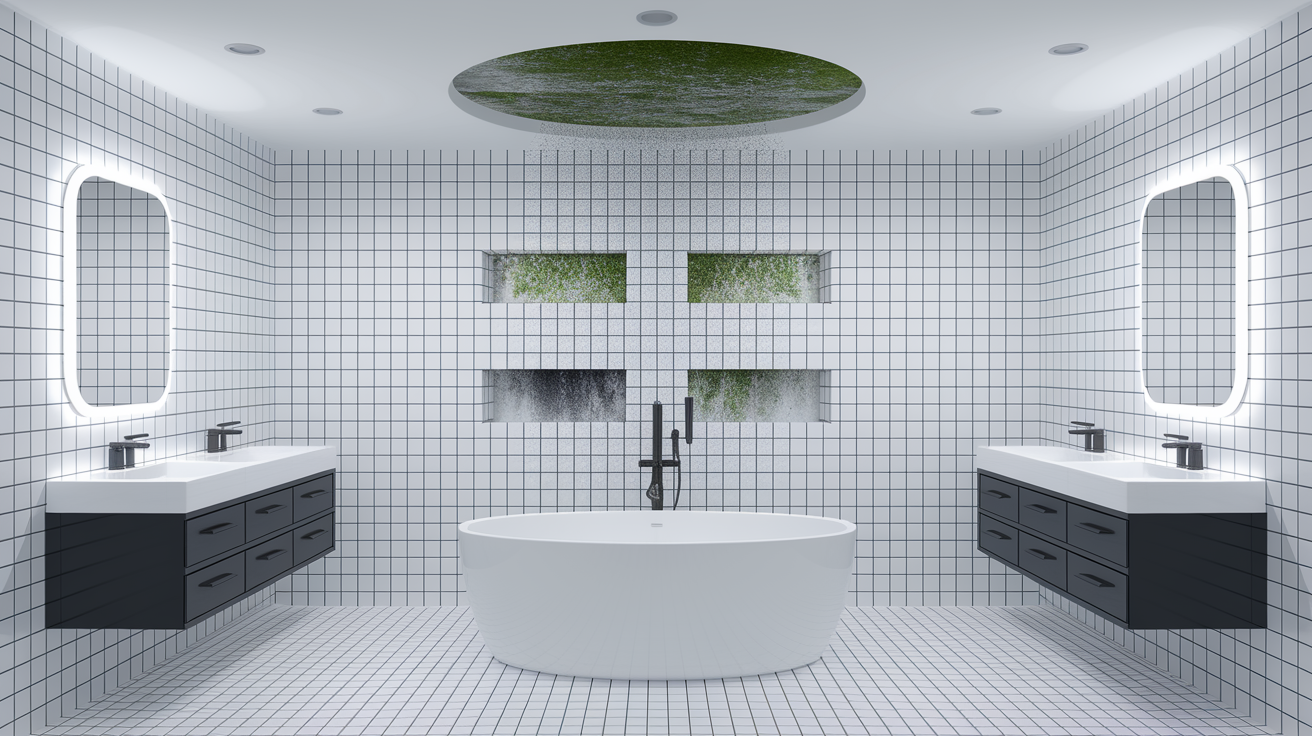
Bathrooms rank as the highest risk rooms in your home for mold development. They combine constant moisture exposure with often inadequate ventilation in a confined space.
The most common bathroom mold locations include shower walls and curtains where water contact is constant, tile grout lines that absorb moisture through porous surfaces, ceiling corners where warm humid air rises and condenses, caulking around bathtubs and showers where deteriorated sealant allows water penetration, cabinets and floors under sinks where leaking pipes create hidden damp zones, and the base of toilets where condensation and minor leaks go unnoticed. Growth also appears behind toilets, around window frames, on bath mats, and inside exhaust fan housings. Hidden contamination in wall cavities behind tile or drywall often goes undetected until musty odors or visible staining appear.
| Mold Location | Underlying Cause | Risk Level |
|---|---|---|
| Shower walls and curtains | Poor ventilation, inadequate exhaust, constant water exposure | High |
| Grout lines between tiles | Porous surface moisture absorption, deteriorated sealing | Medium |
| Ceiling corners and edges | Condensation from steam, roof leaks, attic moisture | High |
| Caulking around fixtures | Deteriorated or missing sealant allowing water intrusion | Medium |
| Under sink cabinets | Leaking pipes, poor drainage connections, condensation | High |
| Bathroom floor surfaces | Poor drainage, standing water, grout deterioration | Medium |
| Wall cavities behind tile | Hidden leaks, failed waterproofing, chronic moisture penetration | Very High |
Moisture sources that feed bathroom mold growth stem from both obvious and hidden problems. Leaking pipes behind walls or under floors create constant dampness invisible until significant damage occurs. Fixture leaks around toilet bases, faucet connections, and shower valves introduce water where it shouldn’t be. Poor drainage from clogged or improperly sloped systems allows water to pool on floors and in corners. Condensation buildup from inadequate ventilation leaves a moisture film on all surfaces after every shower, never fully drying between uses. Bathroom humidity levels regularly exceeding 60% create ideal conditions for rapid mold colonization. When these moisture sources combine with organic materials like drywall, wood, grout, and caulking, mold growth becomes nearly inevitable without proper prevention. Addressing underlying water problems proves just as critical as removing existing contamination. Otherwise you’re just treating symptoms rather than causes. Professional water damage restoration tackles the root moisture issues that create mold friendly conditions in bathrooms.
Health Hazards Associated with Bathroom Mold Exposure
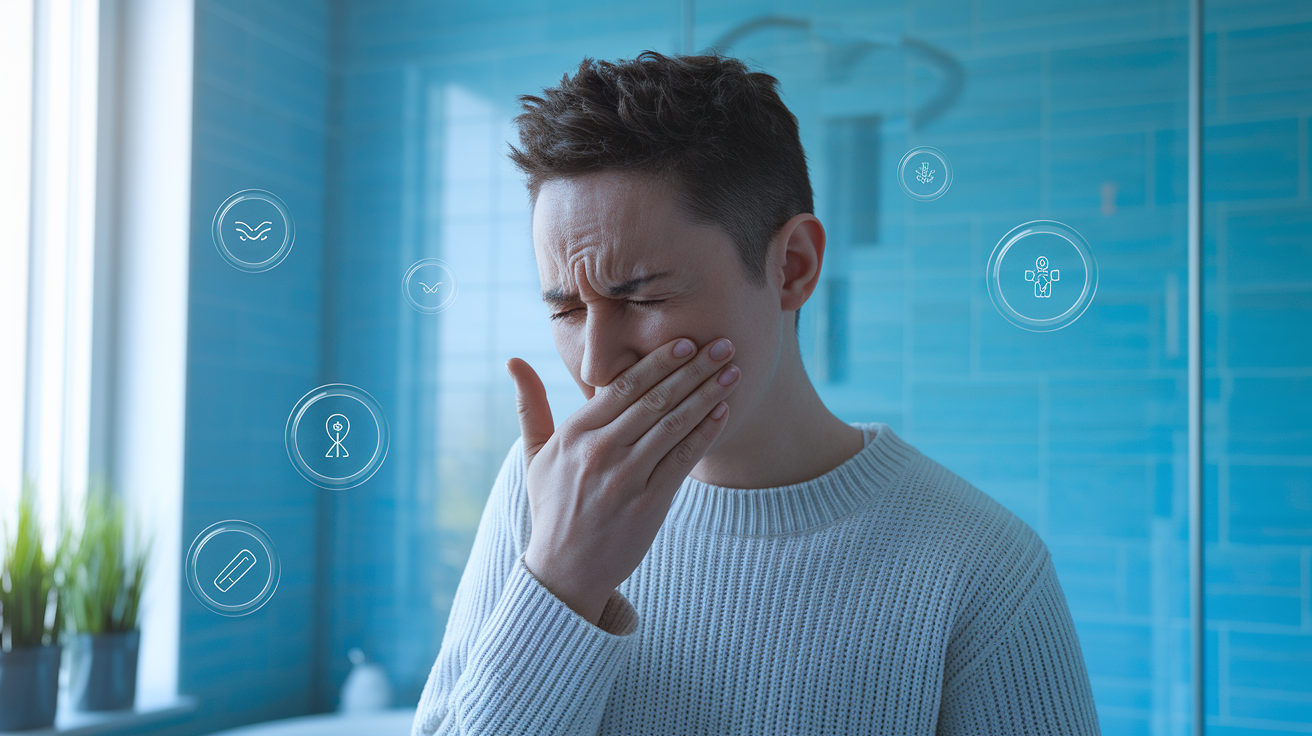
Mold exposure poses genuine health risks, especially in enclosed bathroom spaces where spore concentration builds quickly and ventilation often falls short.
Common symptoms from bathroom mold exposure include respiratory problems like difficulty breathing and chest tightness, allergic reactions ranging from mild to severe, persistent coughing that gets worse in the bathroom, wheezing and shortness of breath, eye irritation with redness and watering, skin rashes and irritation from contact or airborne exposure, headaches that develop during or after bathroom use, and chronic fatigue that doesn’t resolve with rest. Symptoms typically worsen with longer exposure duration and higher spore concentrations. People often notice their symptoms improve when they leave home and return when they’re back in the affected bathroom.
Black mold (Stachybotrys chartarum) and other toxic varieties produce mycotoxins that can cause more severe health effects than common mold species. Not every dark colored mold is toxic black mold, but professional assessment identifies the specific species in your bathroom. Toxic mold exposure can lead to neurological symptoms, immune system suppression, chronic respiratory illness, and severe allergic reactions. Because health effects can be severe and long lasting, any suspected black mold requires professional testing and removal rather than DIY attempts that might spread contamination or expose you to dangerous spore levels during cleaning.
Vulnerable populations face higher health risks from bathroom mold:
- Children whose developing respiratory systems are more susceptible to irritation and infection
- Elderly individuals with reduced immune response and existing health conditions
- People with asthma who experience triggered attacks and worsening symptoms
- Those with compromised immune systems from illness, medication, or medical treatments
- Individuals with existing respiratory conditions like COPD or chronic bronchitis
Musty odor and visible growth indicate active mold spores circulating in your bathroom air every time you shower, use the toilet, or brush your teeth. That distinctive smell means you’re breathing contaminated air. Immediate action protects your household health. Waiting allows spore counts to climb and contamination to spread beyond the bathroom into living areas through air circulation systems and open doorways.
Bathroom Mold Removal Cost Estimates and Pricing Factors

Bathroom mold removal costs vary significantly based on contamination severity, affected square footage, and underlying damage requiring repair.
Typical price ranges break down by project scope. Minor surface mold limited to shower curtains, caulking, or small grout areas runs $300 to $500 for professional cleaning and antimicrobial treatment. Moderate contamination requiring material removal like a section of moldy drywall behind a tub or contaminated bathroom flooring costs $500 to $1,500 depending on extent. Extensive work with structural repairs, when mold has spread into wall cavities, subfloors, or ceiling joists, ranges from $1,500 to $6,000 or more for complete restoration. Inspection fees typically run $250 to $500 for comprehensive testing and assessment, though many contractors offer free inspections when you commit to their service. Some companies waive inspection costs entirely, building that assessment into their overall project pricing.
Several factors affect your final cost:
- Square footage of contamination because larger affected areas require more labor, materials, and time
- Type of mold present since toxic varieties require stricter safety protocols and disposal procedures
- Materials requiring removal because replacing tile costs more than removing drywall
- Accessibility challenges like tight spaces, second floor bathrooms, or difficult access points increase labor
- Drywall or tile replacement needs since reconstruction adds material and finish work costs
- Underlying water damage repairs like fixing leaking pipes, replacing rotted framing, or repairing subfloors
- Testing and air quality verification for laboratory analysis and post work clearance testing
Insurance claims often cover mold removal when the contamination results from a covered event like a sudden pipe burst or fixture leak. Documentation requirements for coverage include photographic evidence of damage, detailed scope of work from your contractor, laboratory testing confirming mold presence and species, and proof you addressed the problem promptly after discovery. Professionals help with claim paperwork, preparing the comprehensive reports and supporting documentation insurance adjusters require. They communicate directly with adjusters, explain technical findings, and advocate for complete coverage of necessary work. This support significantly improves approval rates and reimbursement amounts.
Competitive pricing varies by region and contractor, so getting multiple quotes helps ensure fair costs. Payment options include credit card processing, check or cash, and structured payment schedules for larger projects. Financing availability through third party lenders makes expensive work manageable with monthly installments rather than lump sum payment. Warranty coverage typically guarantees work against mold return for one to five years, provided you maintain proper ventilation and address any new water intrusion promptly.
Preventing Future Bathroom Mold Growth After Professional Removal
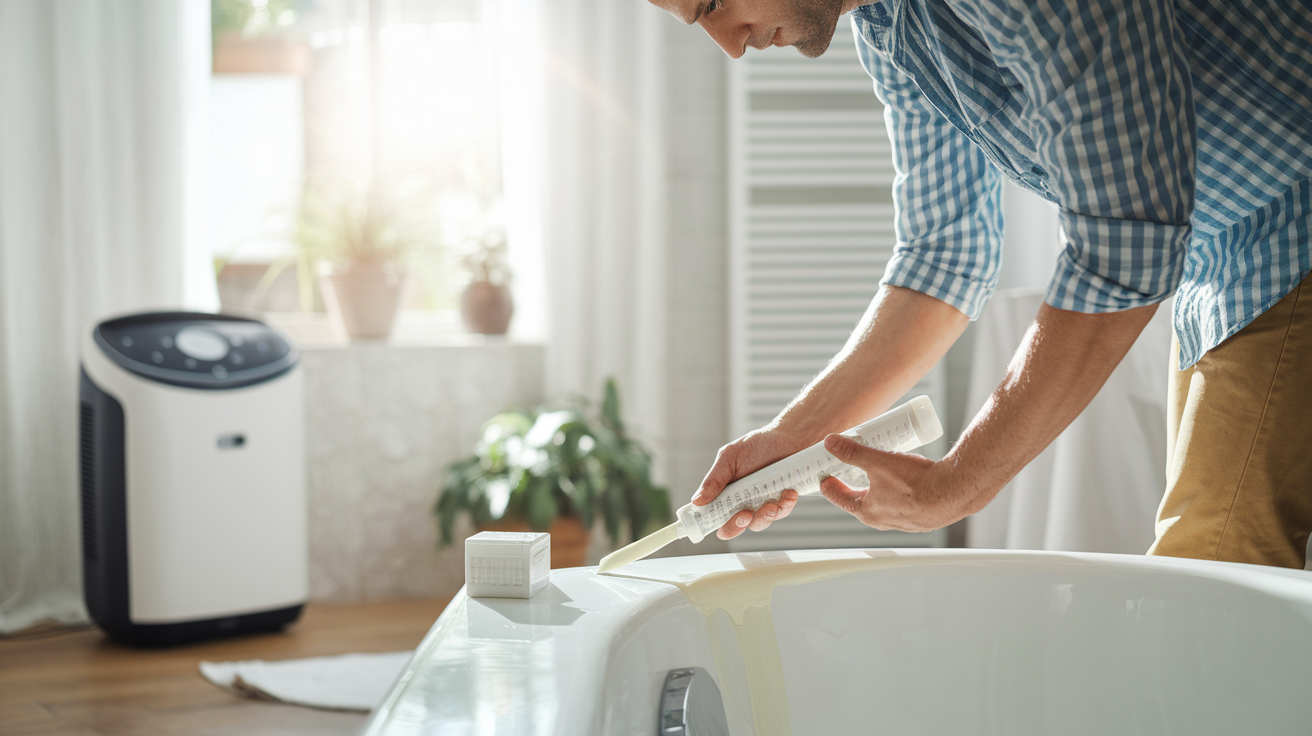
Getting professional removal without prevention creates a costly cycle where mold returns within months, requiring repeated professional intervention and ongoing health exposure.
Humidity and ventilation control forms your primary defense against bathroom mold. Run exhaust fans during every shower or bath and keep them running 20 to 30 minutes after you finish, allowing accumulated moisture to exhaust outside rather than condensing on surfaces. Keep bathroom humidity below 50% using a simple humidity monitor available at hardware stores. Install properly sized exhaust fans if your current system can’t handle moisture load. Bathrooms need fans rated for their square footage, typically 50 to 100 CFM for standard bathrooms. Open windows when weather permits, creating cross ventilation that quickly reduces humidity. Use portable dehumidifiers in chronically damp bathrooms where ventilation alone can’t maintain safe moisture levels, especially in basement bathrooms or spaces without windows.
Practical prevention tips that stop mold before it starts:
- Repair leaking pipes and fixtures immediately upon discovery, not when you get around to it
- Re-caulk tubs and showers annually even if caulk looks intact, because it deteriorates over time
- Seal tile grout every 1 to 2 years with penetrating sealers that block moisture absorption
- Wipe down wet surfaces after bathing using a squeegee on shower walls and doors
- Wash shower curtains and bath mats regularly in hot water to kill any developing spores
- Fix drainage problems promptly when water pools on floors or drains slowly
- Address condensation on pipes by adding foam insulation sleeves to cold water lines
- Maintain proper bathroom ventilation by cleaning exhaust fan grilles and checking ductwork
Regular inspection and maintenance catches developing problems before major growth occurs. Check behind toilets for water stains or dampness monthly, because slow leaks often go unnoticed until significant damage accumulates. Inspect under sinks for dripping pipes, failed seals, or moisture inside cabinets. Look around tub edges and shower pans for caulking gaps or discoloration. Examine ceiling corners and edges for water stains or texture changes indicating moisture intrusion from above. Check window frames and sills for condensation, peeling paint, or soft spots. Inspect caulking and grout for deterioration like cracking, gaps, or color changes. Address any discoloration, musty odors, or texture changes immediately rather than waiting to see if they worsen. Early intervention costs a fraction of full removal work.
Many professionals offer follow up maintenance services and warranty coverage that provides peace of mind after major work. Some provide annual inspection packages where technicians check moisture levels, test air quality, and catch problems before visible growth appears. These preventive services cost far less than emergency work and help you maintain the healthy, mold free bathroom environment you’ve invested in creating.
Professional Mold Testing and Air Quality Assessment for Bathrooms

Not all mold problems announce themselves with visible growth. Sometimes contamination hides in wall cavities, under flooring, or in HVAC systems, detectable only through professional testing that confirms contamination type and severity.
Testing methods provide comprehensive contamination assessment. Air sampling measures airborne spore concentration using calibrated pumps that pull bathroom air through collection devices, capturing spores for laboratory counting and identification. Surface sampling collects material from affected areas using swabs, tape lifts, or bulk samples, identifying what’s growing on your bathroom surfaces. Moisture meter readings detect elevated moisture in walls, floors, and ceilings, pinpointing active water intrusion even when surfaces appear dry. Thermal imaging cameras reveal temperature variations that indicate moisture behind walls or under tile, showing hidden damp areas invisible to visual inspection. Laboratory analysis identifies specific mold species from collected samples, distinguishing common molds from toxic varieties like Stachybotrys chartarum (black mold) and determining whether removal requires special handling protocols.
Testing is recommended in specific situations when you need definitive answers. Before purchasing a home, mold testing reveals hidden contamination that might not appear during standard home inspections, protecting your investment. After water damage events like floods, pipe bursts, or roof leaks, testing confirms whether moisture created mold growth even if none is visible yet. When musty odors exist without visible growth, testing locates hidden contamination causing the smell. To verify successful work, post treatment air sampling proves that spore counts returned to safe levels and work was completed properly. For health symptom investigation when mold is suspected as the cause of respiratory problems, allergies, or other issues, testing either confirms or rules out mold exposure as the source.
Interpreting results requires professional expertise to distinguish normal conditions from contamination requiring action. Professionals compare indoor spore counts to outdoor baseline levels. Some mold is always present in ambient air, so indoor counts should generally match or fall below outdoor readings. Elevated indoor counts, especially for species that don’t typically occur outdoors, indicate active indoor growth. Testing identifies specific mold species present, including toxic black mold varieties that require stricter protocols. Detailed reports document findings with spore counts by species, moisture readings with exact locations, photographic evidence, and clear recommendations for work scope. This documentation supports insurance claims by proving contamination severity and guides property transactions by providing buyers with factual contamination data.
Testing guides the work scope by showing exactly what you’re dealing with. Surface contamination requiring cleaning versus hidden growth demanding wall removal and reconstruction. Post work verification testing confirms that air quality returned to safe levels after treatment completion, providing objective proof that your bathroom is safe to use. This final clearance testing protects your family’s health and validates that the money you spent on professional work actually solved the problem rather than just covering symptoms.
Final Words
Bathroom mold is more than just an eyesore. It’s a real health risk that spreads fast when moisture and poor ventilation create the right conditions.
Professional bathroom mold removal near me means you get trained teams who contain the problem, pull it out completely, fix what’s damaged, and confirm the air is clean again.
Most offer free inspections, same-day service, and help with insurance paperwork so you’re not handling this alone.
The sooner you call, the less damage spreads and the faster your bathroom gets back to safe and normal.
FAQ
How much does it cost to get rid of mold in a bathroom?
The cost to get rid of mold in a bathroom typically ranges from $300 to $500 for minor surface mold, $500 to $1,500 for moderate contamination requiring material removal, and $1,500 to $6,000 or more for extensive remediation with structural repairs and replacement work.
What kills 100% of black mold?
Professional mold remediation kills black mold through complete physical removal of contaminated materials, HEPA filtration containment, antimicrobial application, thorough drying, and post-treatment air quality testing to verify safe spore levels. Surface cleaning alone doesn’t eliminate mold growing inside porous materials like drywall.
What are the signs of hidden mold?
The signs of hidden mold include persistent musty odors without visible growth, unexplained respiratory problems or allergy symptoms, water stains on ceilings or walls, peeling paint or wallpaper, warped baseboards, condensation on pipes, and increased humidity levels above 50% in your bathroom.
How do I permanently get rid of mold in my bathroom?
You permanently get rid of mold in your bathroom by hiring professionals to remove contaminated materials completely, fixing underlying moisture problems like leaking pipes or poor ventilation, maintaining humidity below 50%, running exhaust fans during showers, and sealing grout and caulking regularly.
Do bathroom mold removal professionals offer same-day service?
Bathroom mold removal professionals often offer same-day service, with some companies responding within minutes of your request for emergency situations. Most operate 24/7 to address urgent mold problems quickly, especially when health concerns or extensive contamination require immediate containment and remediation.
What credentials should I look for in a mold removal specialist?
Look for mold removal specialists with Mold Assessor certifications, DEP certification, licensed contractor status, bonded and insured coverage, 10+ years of experience, and companies that have completed thousands of inspection and remediation projects. Verify credentials before hiring to ensure proper training and accountability.
How long does professional bathroom mold removal take?
Professional bathroom mold removal typically takes 1 to 3 days depending on contamination severity, with inspection and testing on day one, containment and removal on subsequent days, and final air quality verification after treatment. Extensive cases requiring structural repairs may extend the timeline to one week or more.
Will my insurance cover bathroom mold removal costs?
Your insurance may cover bathroom mold removal costs if the mold resulted from a sudden covered event like a burst pipe, but typically won’t cover mold from long-term maintenance neglect. Professional remediation companies assist with insurance documentation, scope-of-work reports, and claim paperwork to maximize coverage eligibility.
Can I remove bathroom mold myself or do I need professionals?
You need professionals for bathroom mold covering areas larger than 10 square feet, black mold or toxic varieties, mold inside walls or ceilings, contamination from sewage backup, or when you have respiratory conditions. Small surface spots on grout may be cleaned yourself with proper ventilation and protective equipment.
How do professionals prevent mold spores from spreading during removal?
Professionals prevent mold spores from spreading during removal by sealing off the bathroom with plastic sheeting barriers, creating negative air pressure with HEPA filtration equipment, containing contaminated materials in sealed bags before removal, and conducting air quality testing to verify containment effectiveness throughout the process.
