
You’ll pay way more than just fixing the pipe. Most homeowners budget $400 to $2,000 for the plumber, then get blindsided when the real bill hits $5,000 or more once water damage restoration gets added in. That gap between what you expected and what you actually owe comes down to one thing: water spreads fast, and it doesn’t stop at the burst pipe. Drywall, flooring, insulation, even hidden mold growth behind walls all stack costs you didn’t see coming. This guide breaks down every expense so you can plan for the full project, not just the repair.
Average Repair Costs and Total Project Expenses
Repairing a burst pipe typically costs between $400 and $2,000 for the plumbing work alone, with a national average around $500. But here’s what catches most homeowners off guard: water damage restoration often adds $4 to $7 per square foot on top of that. If mold’s started growing, you’re looking at another $1,500 to $6,000. The total project cost frequently doubles or triples beyond the initial pipe repair estimate once you account for wet drywall, damaged flooring, and everything the water touched before you got it stopped.
Labor drives most of the expense. Nearly 80% of what you’ll pay goes toward the plumber’s time rather than parts. That makes sense when you consider the diagnosis, accessing hidden pipes, making the repair, testing the system, and cleaning up the work area. Plumbers typically charge $150 to $250 per linear foot of pipe when you include both their labor and the materials. The material itself might only cost $0.50 to $30 per foot depending on pipe type, but getting to it and fixing it properly is where the real cost lives.
Here’s what you might pay based on different repair scenarios:
Simple accessible patch repair (under sink, exposed basement pipe): $150 to $250
Wall access repair (cutting drywall, fixing pipe, patching wall): $500 to $800
Basement repair with moderate access challenges: $600 to $1,200
Main water line work (larger diameter, affects whole house): $1,000 to $2,500
Emergency after hours service (nights, weekends, holidays): $800 to $1,800
Underground or slab repair (jackhammering concrete, excavation): $3,000 to $5,000 or more
The pipe repair is just the starting point. Water doesn’t care about property lines or finish materials. It spreads fast. Drywall replacement runs $2 to $6 per square foot including removal of the damaged section, and that’s before repainting. Flooring, insulation, cabinets, trim work… all of it adds up quickly. How much you’ll spend on restoration depends entirely on how fast you caught the leak and how far the water traveled before you shut it off.
Understanding Labor, Service Calls, and Emergency Fees
Labor represents 80% of your total burst pipe repair bill, which means the plumber’s time matters far more than the parts cost. That’s the single biggest number on your invoice.
Plumbers structure their pricing two ways: hourly rates ranging from $45 to $200 per hour, or flat fees between $100 and $1,250 for the complete job. Flat fees usually apply to straightforward repairs where the plumber can assess the scope quickly, like replacing an accessible section of pipe under a kitchen sink or patching a visible basement line. The rate depends on your region, the plumber’s experience level, and the complexity of the work. A simple compression fitting replacement costs far less than cutting into a wall, rerouting pipe, and restoring the wall afterward.
Emergency service changes the pricing structure entirely. When you need a plumber now, like at 2 a.m. when water’s flooding your basement, you’ll pay $120 to $300 per hour for someone who guarantees arrival within 30 minutes. Emergency call out fees add another $100 to $300 just to get them to your door, regardless of how long the repair takes. After hours work (evenings, weekends, holidays) carries surcharges even if it’s not a middle of the night emergency. That premium buys you speed and availability when every minute of running water causes more damage.
Beyond the core labor rate, expect travel fees between $50 and $300 depending on how far the plumber drives to reach your home. Some specialized services come with flat fees instead of hourly billing. Frozen pipe thawing, for example, typically costs around $100 as a standalone service. These fees stack up, so a Saturday night emergency call for a wall pipe repair can easily hit $1,500 when a weekday appointment for the same work might run $600.
| Service Type | Hourly Rate | Call-Out Fee | Typical Response Time | Best For |
|---|---|---|---|---|
| Standard Service | $45 to $200 | None or minimal | Same day to next day | Non-emergency repairs, scheduled maintenance, situations already contained |
| Emergency Service | $120 to $300 | $100 to $300 | 30 minutes to 2 hours | Active flooding, uncontrolled leaks, immediate threat to property |
| After-Hours Service | $100 to $250 | $50 to $150 | 2 to 4 hours | Evenings, weekends, holidays when situation is urgent but contained |
| Flat-Rate Service | N/A (project-based) | Included in quote | Scheduled appointment | Straightforward repairs with clear scope, accessible locations |
Material Costs and How Pipe Type Affects Your Bill
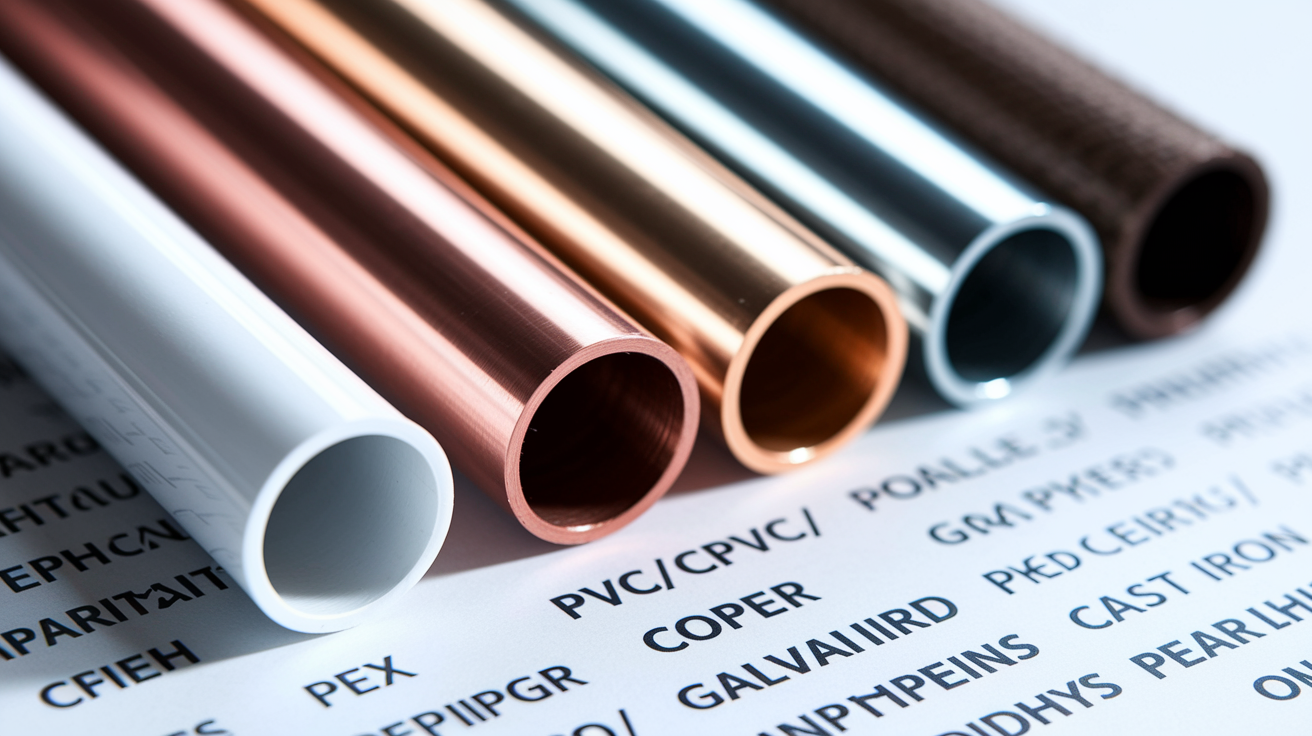
The type of pipe in your home affects both the parts you’ll buy and how much labor it takes to work with them. Pipe materials alone cost anywhere from $0.50 to $30 per linear foot before you add labor, but that range tells only part of the story. A plumber can swap a section of PEX tubing in minutes with basic tools, while cutting and sweating copper pipe joints requires specialized equipment, more skill, and significantly more time.
Modern materials like PEX, PVC, and CPVC keep costs down. They’re flexible, lightweight, and connect with simple compression fittings or solvent cement. Repairs go faster, which means less labor expense even though the hourly rate stays the same. Copper and galvanized steel drive costs up, not because the pipe itself is wildly expensive, but because working with these materials demands specialized tools, techniques like torch soldering, and more experience. That translates directly into higher labor charges and longer job times.
Pipe diameter makes a difference too. Larger pipes cost more per foot and require more effort to handle, cut, and connect. A half inch supply line repair uses less material and takes less time than replacing a section of 2 inch drain pipe, even if they’re the same material. The plumber needs to support the weight, make larger cuts in surrounding structures to access it, and ensure proper slope and alignment for drainage pipes. All of which adds labor time.
At some point, replacing a section of pipe costs less than patching it repeatedly. Full pipe replacement runs $360 to $2,000 depending on the length, material, and accessibility, but it makes sense when you’re dealing with extensive corrosion, multiple damage points along the same line, or an aging system that’s likely to fail again soon. If the wall or floor is already opened for one repair, extending the replacement to cover a longer run or upgrade to better materials costs less than doing it twice. Galvanized steel pipes from the 1950s and 60s, for example, corrode from the inside out. Patching one burst spot leaves the rest of the corroded pipe in place, waiting to fail.
| Pipe Material | Cost Per Linear Foot | Repair Difficulty | Lifespan | Common Uses |
|---|---|---|---|---|
| PEX | $0.50 to $2.00 | Low—flexible, simple connections | 40 to 50 years | Hot and cold water supply lines, whole-house repiping |
| PVC/CPVC | $0.50 to $5.00 | Low to moderate—requires solvent cement, rigid | 50 to 70 years | Drain lines, cold water supply (PVC), hot water supply (CPVC) |
| Copper | $2.00 to $10.00 | Moderate to high—requires soldering, specialized tools | 50 to 70 years | Water supply lines in older and high-end homes |
| Galvanized Steel | $3.00 to $8.00 | High—heavy, corrodes internally, threaded connections | 20 to 50 years (often degraded) | Older homes, gradually being replaced due to corrosion issues |
| Cast Iron | $10.00 to $30.00 | Very high—extremely heavy, requires cutting equipment | 50 to 100 years | Older drain and sewer lines, rarely used in new construction |
Water Damage Restoration Costs Following a Burst Pipe
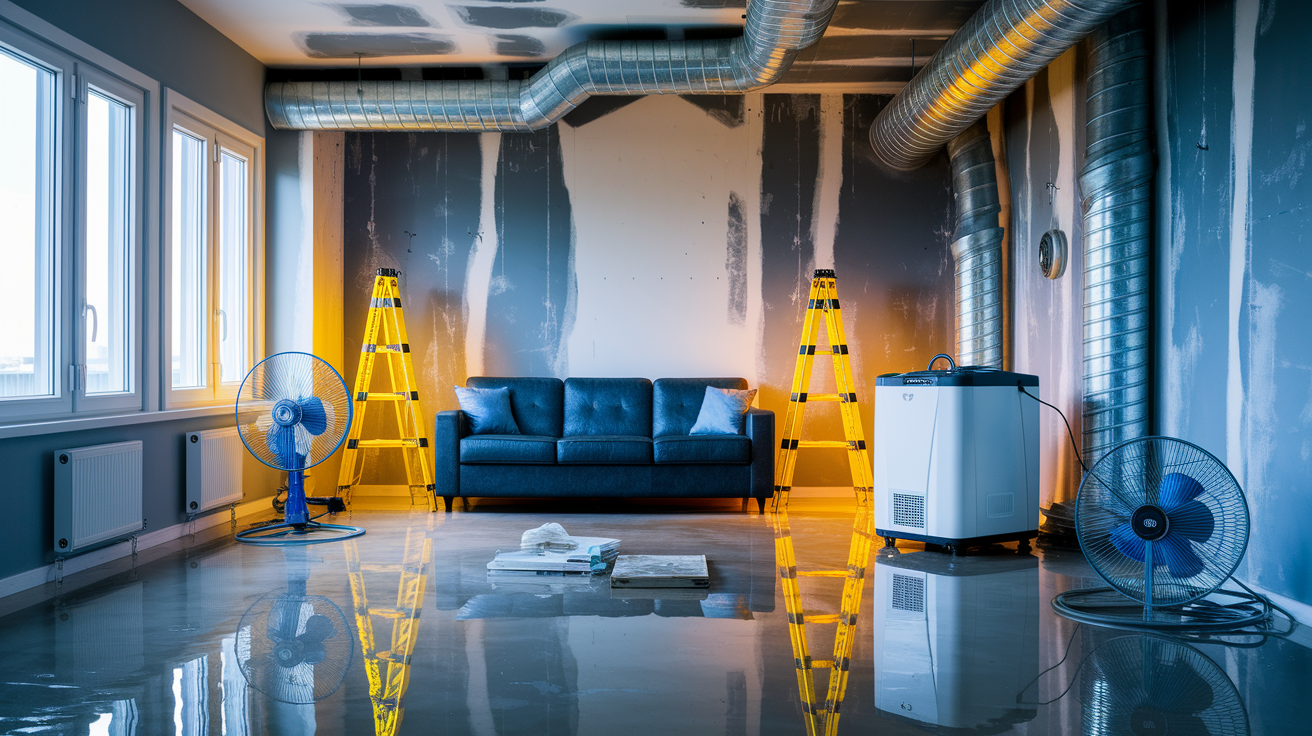
The pipe repair bill is just the beginning. Water damage restoration frequently doubles or triples your total project cost. In severe cases with mold growth or structural damage, it can multiply the expense by five or more. A $500 pipe repair can easily turn into a $3,000 to $5,000 restoration project once you account for everything the water touched.
How much you’ll spend depends entirely on how long the water ran and where it went. A burst pipe discovered within minutes might only damage a section of drywall and some flooring. One that leaked behind a wall for hours or days before you noticed it can soak insulation, rot framing, spread through multiple rooms, and create conditions for mold growth within 24 to 48 hours.
Here’s what secondary damage restoration typically costs:
Drywall replacement: $2 to $6 per square foot, including cutting out the damaged section, installing new drywall, taping, mudding, and sanding
Interior painting: $1 to $3 per square foot to repaint surfaces after drywall repair or water staining
Flooring replacement: $4 to $15 per square foot depending on material. Laminate on the low end, hardwood and tile on the high end.
Carpet removal: $0.70 to $1.60 per square foot just to pull up and dispose of water soaked carpet and padding
Wood floor repair: $2 to $20 per square foot if the wood can be dried, sanded, and refinished rather than fully replaced
Cabinet replacement: $250 to $600 per cabinet box when water damage causes swelling, warping, or mold growth in base cabinets
Insulation replacement: $1.00 to $4.50 per square foot for wet insulation that’s lost its R value and may harbor mold
Interior trim installation: $4 to $10 per linear foot for baseboards, door casings, and window trim damaged by water exposure
Repair Costs Based on Pipe Location in Your Home
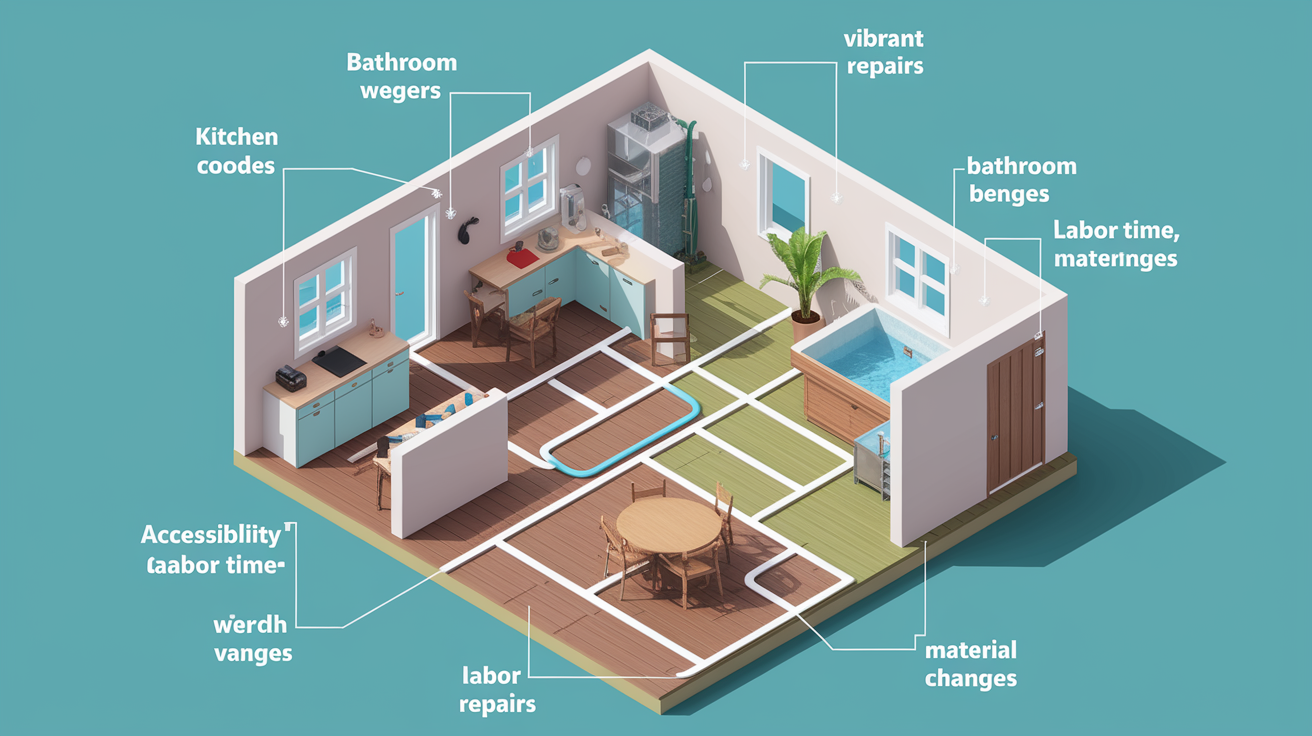
Where the pipe burst in your house has as much impact on total cost as the pipe type or damage severity. Accessibility drives labor time, and labor time drives cost. An exposed pipe under a kitchen sink takes an hour to fix. The same pipe hidden behind tile in a bathroom wall can take a full day once you factor in cutting the tile, accessing the pipe, making the repair, and restoring the wall.
Kitchen and Bathroom Pipe Repairs
Kitchen and bathroom repairs typically run $150 to $800 depending on accessibility. Under sink supply line repairs sit at the low end because the plumber can reach them without cutting anything open. Just open the cabinet door and get to work. Pipes behind walls or under tile floors push costs higher. Bathroom repairs trend toward the upper end of this range when the burst pipe sits behind a shower surround or under a tile floor where the plumber has to remove finished surfaces, make the repair, and coordinate with a tile setter or finish carpenter to restore everything properly.
Burst Pipes Inside Walls
Wall cavity repairs combine plumbing and drywall work, which means you’re paying for two separate skill sets. The plumbing portion costs $150 to $500 depending on pipe size and material, but then you need to add $50 to $75 per square foot for drywall repair and restoration. That includes cutting the access hole (often larger than the damaged pipe section to allow room to work), installing new drywall, taping and mudding the seams, sanding, priming, and repainting to match the existing wall. If the burst damaged drywall beyond the access area, those square footage costs stack up quickly.
Basement and Crawl Space Repairs
Accessible basement pipe repairs (exposed pipes along ceiling joists or utility room walls) cost $200 to $600. The plumber can see the damage, reach it easily, and make the fix without demolition work. But if the pipe runs through a concrete floor or behind a finished basement wall, costs can hit $4,500 or more. Cutting concrete requires specialized equipment, creates dust and debris, and involves a multi step process: cut the concrete, excavate to expose the pipe, make the repair, backfill, and pour new concrete. Each step adds labor hours and material costs.
Main Water Line Damage
Main water line repairs cost $150 to $2,000 for isolated damage, but full line replacement runs $50 to $250 per linear foot depending on length and excavation difficulty. Main lines carry higher costs because they’re larger diameter pipes (often 3/4 inch to 1.5 inch), serve the entire house, and usually require shutting off water to the whole property during repairs. The plumber needs to coordinate with the water utility to shut off service at the street, work quickly to minimize disruption, and pressure test the system before restoring service. Any delay means no water anywhere in the house. No toilets, no showers, no drinking water.
Sewer Line Burst Pipes
Sewer line repairs are the most expensive category at $1,300 to $4,700, with an additional $500 average for deep cleaning afterward. The cost reflects both the difficulty and the contamination factor. Sewer lines carry waste, which means the plumber needs specialized safety equipment, proper disposal of contaminated soil or water, and thorough sanitization of the work area. Many sewer line repairs require excavation to expose the pipe, trenchless repair technology for less invasive fixes, or camera inspection to locate the exact failure point before digging. The cleaning cost covers professional sanitization and restoration of areas exposed to sewage.
Outdoor Sprinkler System Pipes
Sprinkler system burst pipes cost $150 to $350 to repair the pipe itself, plus an average $260 for related sprinkler system repairs like replacing damaged sprinkler heads, fixing controller wiring, or adjusting zone valves. These repairs trend lower because the pipes are smaller diameter (usually half inch to one inch), accessible by digging shallow trenches, and don’t affect the house’s critical water supply. Timing matters though. Repairing sprinkler lines during the growing season when you need the system operational creates more urgency than off season repairs that can wait for better weather.
Homeowners Insurance Coverage for Burst Pipe Damage

Most homeowners insurance policies cover burst pipe repairs and resulting water damage when the failure happens suddenly and accidentally, like frozen pipes that crack from expanding ice, or a pipe that bursts from a sudden pressure surge. The coverage typically includes both the plumbing repair and secondary damage to walls, floors, ceilings, and belongings. Your policy treats it as a covered peril, the same as wind or hail damage, as long as the pipe failure meets the “sudden and accidental” standard.
Insurance won’t cover burst pipes that result from negligence or poor maintenance. If you left your home unheated during freezing weather, failed to repair a known slow leak that eventually failed, or ignored warning signs of corroding pipes until they burst, your insurer will likely deny the claim. The policy expects you to maintain your home in reasonable condition and take basic precautions like keeping heat on in winter. Documentation matters here. If you can show you maintained the home properly and the burst was truly unexpected, your claim stands a better chance.
Coverage type affects how much you’ll receive. Replacement cost coverage pays to repair or replace damaged property at current prices without depreciation. Actual cash value coverage deducts depreciation from the payout, which means you’ll receive less money and pay more out of pocket. Your deductible applies to every claim, so if you have a $1,000 deductible and the total damage costs $3,500, insurance pays $2,500 and you cover the rest. For smaller burst pipe incidents that cost less than your deductible, filing a claim doesn’t make financial sense.
The claims process moves fastest when you act immediately. Call your insurance company as soon as you discover the burst pipe, even before the plumber arrives if possible. They’ll assign a claims adjuster to assess the damage, but they also expect you to mitigate further damage right away. That means shutting off water, removing standing water, and starting the drying process. Save every receipt, take photos before and after cleanup, and get itemized invoices from the plumber and restoration company. Your insurer needs this documentation to process the claim, and missing paperwork can delay payment for weeks.
Immediate Steps to Take When a Pipe Bursts
Time matters more than anything else when a pipe bursts. Every minute of running water spreads damage further into floors, walls, insulation, and belongings. Fast action limits the affected area, reduces total repair costs, and prevents mold from establishing itself in wet materials.
Temporary fixes like silicon pipe tape, epoxy putty, or pipe repair kits with clamps and rubber gaskets can slow or stop a small leak for a few hours or days until a professional arrives. These are stopgap measures only. They buy you time, but they’re not permanent repairs. A proper fix requires cutting out the damaged section and replacing it with new pipe, which only a licensed plumber should attempt.
-
Shut off the main water supply immediately. The main shutoff valve is usually near where the water line enters your home (basement, crawl space, or utility room). Turn it clockwise until it stops. This stops all water flow to the house.
-
Turn off electricity to affected areas. Water and electricity create serious safety hazards. Flip the breakers for any rooms with standing water or wet walls before you start cleanup.
-
Call your insurance company. Report the damage right away, even if you’re not sure you’ll file a claim. They’ll start the claims process and send an adjuster.
-
Document everything with photos and video. Photograph the burst pipe, standing water, damaged materials, and affected rooms from multiple angles before you start cleaning up. This documentation supports your insurance claim.
-
Contain the water spread. Use towels, mops, and a wet dry vacuum to remove standing water and prevent it from spreading to unaffected areas. Move furniture and belongings out of wet zones.
-
Call an emergency plumber. Even if you’ve stopped the immediate leak with a temporary fix, you need a professional assessment and permanent repair within hours. Emergency plumbers charge $120 to $300 per hour but typically arrive within 30 minutes to 2 hours.
-
Remove valuables and important items from affected areas. Get electronics, documents, photographs, and anything irreplaceable away from wet zones to prevent further loss.
Getting Estimates and Selecting a Qualified Plumber

Get at least three estimates when time allows, which means any situation that’s contained and not actively flooding. Multiple quotes let you compare pricing, understand what’s included in each proposal, and spot outliers that seem too low or unnecessarily high. Emergency situations change this rule. When water is actively running and causing damage, your priority is stopping it immediately, not shopping around.
Contractor credentials matter more than price. Look for plumbers with active licensing in your state, current liability insurance and workers’ compensation coverage, bonding that protects you if the plumber damages your property or doesn’t complete the work, and at least five years of experience with the specific type of pipe in your home. Check online reviews on multiple platforms, ask for references from recent similar projects, and verify that any complaints filed with the Better Business Bureau or state licensing board were resolved satisfactorily. A plumber with excellent reviews and proper credentials might charge 15% more than average, but that premium buys you quality work and protection if something goes wrong.
Ask these questions before hiring:
What’s your license number and how can I verify it?
Do you carry liability insurance and workers’ comp, and can you provide proof?
How many years have you worked with this specific pipe material?
What’s your estimated timeline from start to completion?
Can you provide an itemized quote showing labor, materials, permits, and any additional costs separately?
What warranty do you offer on parts and labor?
Do you offer emergency service, and what’s your typical response time?
What’s your payment schedule? Do you require a deposit, and when is final payment due?
Never pay the full amount upfront. Legitimate plumbers charge a deposit of 10% to 30% for materials, then collect the balance when work is complete and you’ve verified it meets code and your expectations. A contractor demanding full payment before starting work is either financially unstable or planning to disappear with your money. Arrange a payment plan tied to project milestones: deposit when work begins, partial payment when the pipe repair is complete and tested, final payment after all restoration work passes your inspection.
Hidden and Additional Costs to Budget For
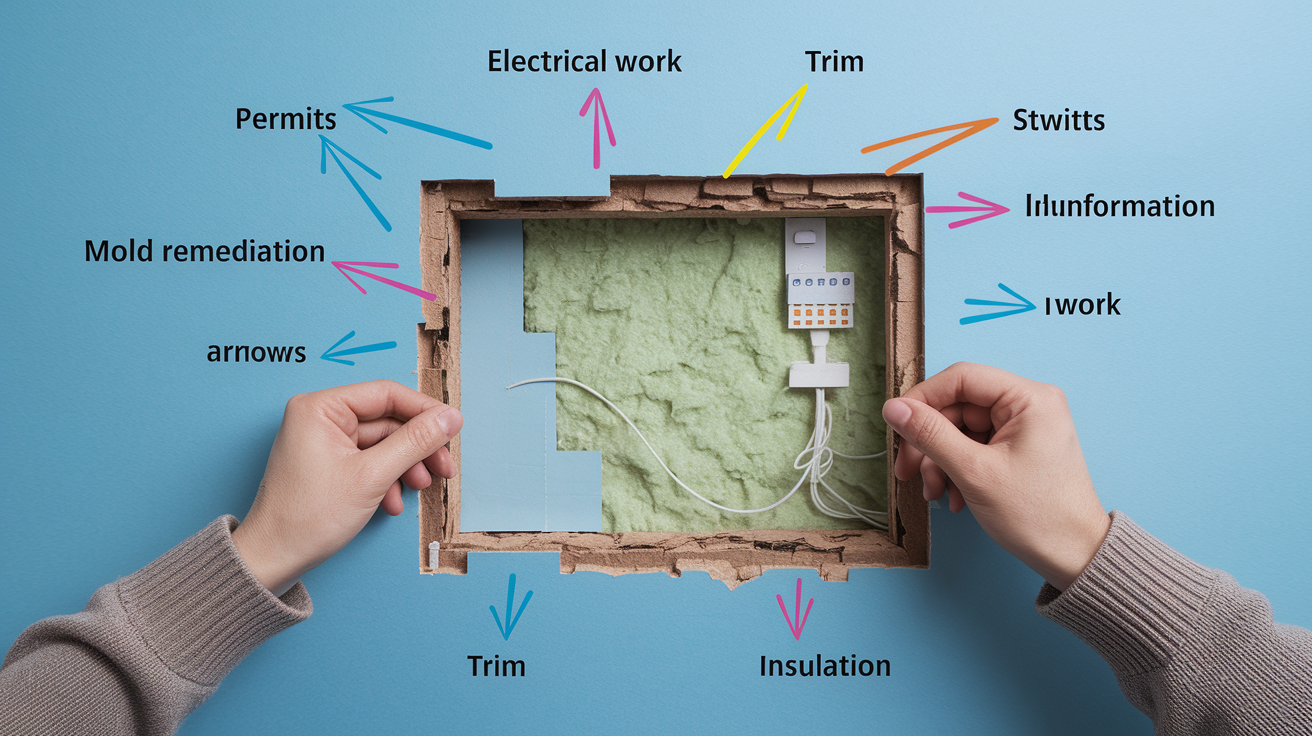
Initial estimates capture the obvious work but rarely include everything you’ll actually pay. Budget overruns are normal in pipe repair projects because hidden damage only becomes visible once walls or floors are opened.
Add 15% to your estimate as a contingency for additional expenses that typically appear mid project. That percentage covers situations like discovering that more of the pipe needs replacement than the plumber initially thought, finding mold behind walls that must be remediated before reconstruction can begin, or uncovering secondary damage to electrical systems or HVAC ducts that run near the burst pipe. A $2,000 estimate becomes $2,300 with this buffer, which is far easier to absorb than being surprised by an unexpected $1,500 charge with no planning.
Commonly forgotten costs that increase the final bill:
Permits and inspections: $50 to $500 depending on local requirements and project scope. Some jurisdictions require permits for any plumbing work that involves pipe replacement or relocation.
Electrical work in affected areas: $150 to $1,000 when water damaged outlets, switches, or wiring that must be replaced before walls can close up
HVAC ductwork damage: $200 to $1,500 if water soaked insulation around ducts or corroded duct connections need repair
Structural reinforcement: $500 to $3,000 when water damaged floor joists, wall studs, or other framing members that must be sistered or replaced to maintain structural integrity
Insulation replacement: $1.00 to $4.50 per square foot for wet insulation that lost its effectiveness and may harbor mold
Cabinet replacement: $250 to $600 per cabinet box when water caused particleboard swelling or mold growth that can’t be salvaged
Trim and finishing work: $4 to $10 per linear foot for baseboards, crown molding, door casings, and window trim damaged during access or by water exposure
These extras typically show up after the plumber opens the wall or floor to access the burst pipe. Water travels along studs, joists, and other pathways hidden behind finished surfaces, so damage often extends beyond the visible wet spot that led you to call for help in the first place. A ceiling stain might indicate a burst pipe directly above it, but once the plumber cuts open the ceiling, you discover the water traveled 8 feet along a joist and soaked insulation across three ceiling bays. That’s not the plumber padding the bill. It’s the reality of how water behaves in a structure.
Prevention Strategies to Avoid Future Burst Pipe Costs
Spending $100 to $200 every one to two years on professional plumbing inspections prevents thousands in emergency repairs. That’s not contractor marketing, it’s simple math. A visual plumbing inspection catches early warning signs like corrosion, loose connections, water pressure issues, and aging pipe materials before they fail catastrophically.
Regular inspections give you a baseline understanding of your system’s condition and a timeline for planned upgrades rather than emergency replacements. If the plumber notes that your galvanized steel pipes show surface corrosion and water discoloration, you can budget for replacement over the next year or two instead of dealing with a midnight burst pipe emergency that forces immediate decisions under stress. Inspection costs also qualify as maintenance documentation if you ever need to file an insurance claim, showing you maintained the home properly and the burst was truly unexpected.
Take these steps to reduce burst pipe risk:
Insulate exposed pipes in unheated spaces like crawl spaces, attics, garages, and exterior walls where freezing temperatures can reach them
Winterize your plumbing system before cold weather if you live in a climate with freezing winters. Drain outdoor faucets, disconnect hoses, and consider installing pipe heating cables in vulnerable areas.
Maintain consistent heating throughout your home during winter, even when you’re away. Set the thermostat no lower than 55°F to keep pipes above freezing.
Let faucets drip during extreme cold to keep water moving through pipes, which prevents ice formation that leads to pressure buildup and bursting
Update home insulation in walls, attics, and crawl spaces to maintain warmer temperatures in areas where pipes run
Schedule professional inspections every 1 to 2 years to catch aging, corrosion, and early failures before they become emergencies
Watch for these warning signs that indicate potential pipe problems developing:
Unusual pipe sounds like banging, whistling, or gurgling when you turn faucets on or off. Water hammer or air in the lines can stress connections.
Damp or discolored walls and floors that appear without obvious cause. Hidden slow leaks often show up as staining before they burst.
Musty odors in walls, ceilings, or under floors that suggest moisture accumulation from undetected leaks
Water pressure drops that weren’t caused by increased usage. Corrosion or partial blockages reduce flow and increase stress on weak points.
Water discoloration like brown, yellow, or rust colored water indicating corroding pipes that may fail soon
Inconsistent water pressure between fixtures or rooms suggesting problems in specific pipe runs
Unexplained water bill increases that can’t be attributed to usage changes. Even small leaks waste hundreds of gallons monthly and often get worse.
Timeline Expectations for Burst Pipe Repair Projects
Emergency plumbers typically arrive within 30 minutes to 2 hours after you call, depending on your location and current call volume. That rapid response is what you’re paying for with those $120 to $300 per hour emergency rates. Someone who drops everything, stocks the right parts, and gets to your home while water is still actively causing damage.
Simple accessible repairs take 1 to 2 hours once the plumber arrives. Under sink supply line replacements, exposed basement pipe patches, and other straightforward fixes fall into this category. The plumber shuts off water to the affected fixture or the whole house, cuts out the damaged section, installs new pipe, tests for leaks, and cleans up. You can have water running again before lunch.
Complex repairs involving wall or floor access can take a full day or longer. The plumber needs to cut into finished surfaces to reach the pipe, make the repair, test it thoroughly, and coordinate with other trades for drywall repair, tile work, or flooring restoration. If the burst damaged pipes in multiple locations or the plumber discovers additional problems once they start working, the timeline extends. Behind wall repairs also require drying time before reconstruction. You can’t close up wet framing or install new drywall over damp insulation without creating mold conditions.
Full restoration projects with significant water damage, mold remediation, and reconstruction take 1 to 4 weeks from pipe repair to final walkthrough. The timeline depends on damage extent and how many trades need to coordinate their work. Water extraction and drying might take 3 to 5 days. Mold remediation adds another 3 to 7 days depending on affected area size. Drywall replacement, flooring installation, cabinet work, painting, and trim restoration happen in sequence, with each trade waiting for the previous one to complete their portion. Severe damage that affects multiple rooms, requires temporary housing arrangements, or involves structural repairs can extend to 6 weeks or more before your home is fully restored.
DIY Temporary Fixes Versus Professional Repair
DIY pipe repairs are temporary emergency measures that buy you hours or maybe a few days until a professional can make a permanent fix. They’re not solutions, they’re stopgaps that let you shut off the active flooding and wait for business hours or shop around for quotes instead of paying middle of the night emergency rates.
Temporary options include silicon pipe tape wrapped tightly around a pinhole leak or small crack, two part epoxy putty molded around the damaged area and allowed to cure, or pipe repair kits with rubber gaskets and metal clamps that compress around the leak. These work for small leaks in accessible locations where you can reach the pipe, clean and dry the surface somewhat, and apply the patch. They’ll hold for a while under normal pressure, but they’re not rated for long term use, won’t pass plumbing inspections, and can fail without warning if water pressure spikes or the damaged area expands.
Professional repair is necessary for permanent fixes because plumbers make code compliant repairs that won’t fail, warranty their work against leaks and defects, properly diagnose why the pipe burst so you can address underlying issues like corrosion or pressure problems, and ensure the repair integrates correctly with your existing plumbing system. Improper DIY repairs often make the professional’s job harder and more expensive. A homeowner who overtightens a compression fitting, uses the wrong type of tape or cement, or accidentally damages adjacent pipes while attempting a fix can turn a $300 professional repair into a $700 cleanup of multiple problems.
| Approach | Cost Range | Timeframe | Best For | Limitations |
|---|---|---|---|---|
| DIY Temporary Fix | $10 to $50 for materials | 15 to 30 minutes to apply, holds for hours to days | Small accessible leaks, buying time until professional arrives, avoiding emergency rates by waiting for business hours | Not permanent, can fail suddenly, doesn’t address underlying causes, won’t pass inspection, may void insurance coverage if used long-term |
| Professional Repair | $150 to $2,000+ depending on location and damage | 1 to 2 hours for simple repairs, several hours to days for complex work | Permanent fixes, code compliance, warranty protection, proper diagnosis of underlying problems, insurance claim documentation | Higher upfront cost, requires scheduling (except emergencies), may involve opening walls or floors for access |
Final Words
The cost to repair burst pipe damage varies widely based on pipe location, material type, and how much water spread before you shut things off.
Plumbing alone might run $400 to $2,000, but water damage restoration often doubles or triples that number.
Getting multiple estimates, checking contractor credentials, and acting fast all help control costs. Budget for that 15% contingency and keep an eye on those early warning signs.
Catching problems early beats paying for emergency repairs and complete restoration later.
FAQ
How much does a plumber charge to fix a busted pipe?
A plumber charges $400 to $2,000 on average to fix a busted pipe, with most repairs costing around $500. Small accessible patches start at $150, while complex underground or hard-to-reach pipes can exceed $5,000 including wall or floor restoration.
Will my house insurance cover a burst pipe?
House insurance will cover a burst pipe if the damage resulted from sudden, accidental events like freezing temperatures or unexpected high water pressure. Coverage typically excludes damage from negligence, poor maintenance, or leaving your home unheated during freezing conditions.
How much should it cost to fix a burst pipe?
Fixing a burst pipe should cost between $400 and $2,000 for the plumbing repair itself, but total project costs often reach $3,000 to $8,000 when water damage restoration, drywall replacement, and mold remediation are included in the final bill.
Would a burst pipe be covered by insurance?
A burst pipe would be covered by insurance when it occurs suddenly from freezing, pressure spikes, or accidental damage, but most policies exclude coverage for pipes that failed due to lack of maintenance, gradual deterioration, or negligent home care.
