
Standing water might be gone in a day, but that doesn’t mean your home is dry. Most people think cleanup ends when floors stop looking wet. It doesn’t. Water hides in walls, soaks into subflooring, and sits in places you can’t see. The real question isn’t when things look dry. It’s when materials actually reach safe moisture levels. That difference, between surface dry and structurally dry, is what determines whether you’re looking at 3 days or closer to 10.
Expected Drying Timeline After a Burst Pipe
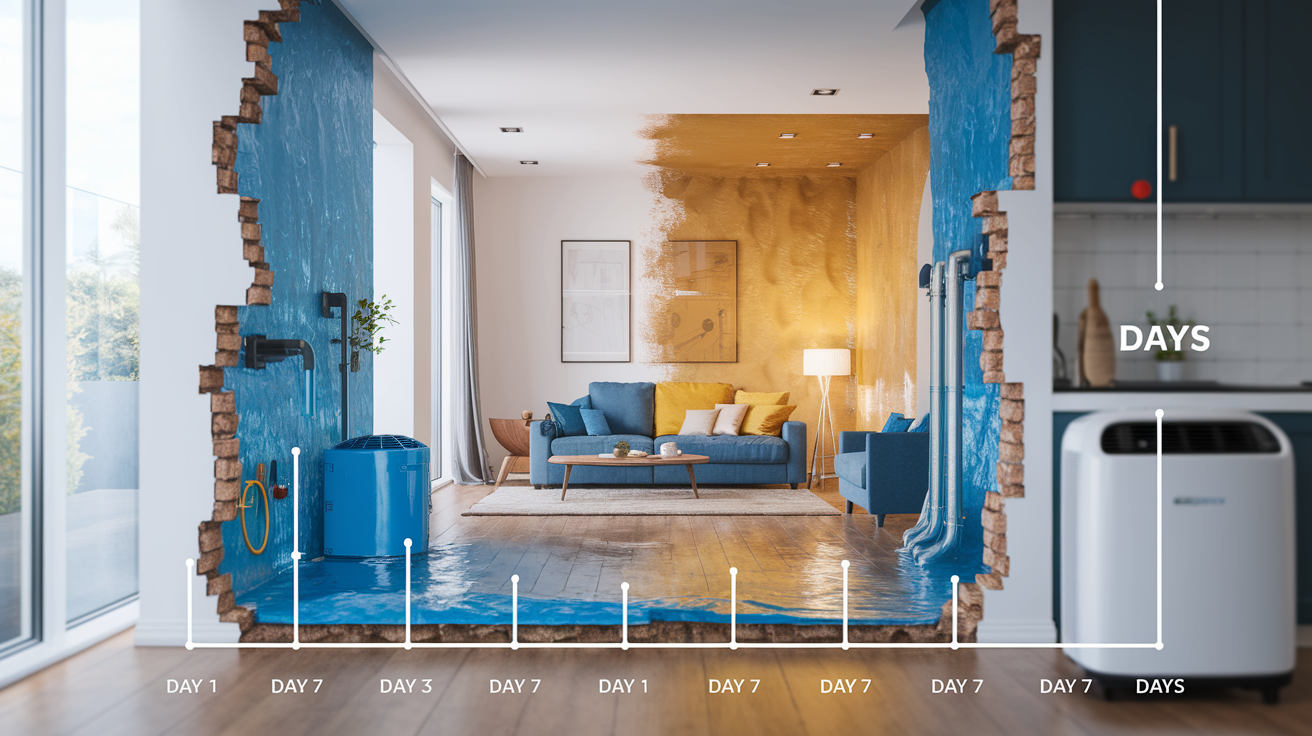
Drying time after a burst pipe can range anywhere from 2 days for minor leaks to over a week when you’re dealing with serious flooding. It really comes down to how much water got out, where it ended up, and how fast you started pulling it back.
The first day or two is all about extraction and getting things under control. That’s when standing water gets pumped out, soaked carpet and padding come up, and dehumidifiers start working to drop the humidity. You’ll see the biggest changes during this stretch. Water disappears from floors, puddles shrink, everything starts feeling less heavy in the air. Professionals also check for electrical problems and structural issues right away. The faster this all happens after the pipe lets go, the less water soaks into places you can’t easily reach.
Days 2 through 5 make up the main structural drying phase. By now the obvious water is gone, but your walls, floors, and ceilings are still holding moisture. Air movers and dehumidifiers run continuously, pushing moisture out of building materials and pulling it from the air. Drywall starts releasing what it absorbed. Wood framing dries from the inside out. You might not see much happening on the surface, but moisture meters show steady progress as materials move toward normal levels.
Days 5 to 7 and beyond address hidden moisture that takes the longest to evaporate. Water trapped in wall cavities, soaked insulation, pooled moisture under flooring. This phase stretches timelines because you can’t see or directly access these areas. Water travels sideways through wall cavities, saturating insulation and wooden framing behind drywall. It pools between subfloors and finish flooring, trapped under vinyl, tile, or hardwood with nowhere to go except slowly upward. Professional thermal imaging reveals these hidden pockets, showing bright spots of moisture inside walls and under floors that look perfectly dry from the outside.
The most time consuming drying happens in spaces you’ll never directly observe. Complete drying means all materials reach normal moisture levels, not just surfaces that feel dry to the touch. A ceiling that looks fine might still hold water in the insulation above it. Hardwood that stopped dripping might sit on a soaked subfloor. This is why drying timelines extend well beyond when things look normal.
Key Factors That Control Burst Pipe Drying Duration

Drying speed isn’t fixed. It depends on several variables that can stretch a 3 day job into something closer to 10 days.
Six major factors affecting drying time:
- Volume of water released and how long the leak ran
- Types of building materials exposed to water
- Indoor temperature and humidity levels
- Quality of ventilation and airflow
- Speed of emergency response and water extraction
- Seasonal weather conditions
Porous materials like drywall and carpet padding absorb water deeply and hold it longer, while surfaces like tile, metal, and plastic shed water quickly. A burst pipe that floods tile floors creates a much faster cleanup than one that soaks carpeted rooms with wood subflooring. Drywall pulls water up through capillary action even after visible flooding stops, sometimes wicking moisture two feet above the waterline. Wooden floor joists and studs absorb water slowly but release it even slower, adding days to the timeline.
Warm temperatures and low humidity create optimal conditions by speeding evaporation and allowing air to hold more moisture before dehumidifiers pull it out. Cold, humid environments do the opposite. Water evaporates slowly, and saturated air can’t accept much more moisture, which dramatically extends timelines. A burst pipe in a 65 degree basement during a humid summer week takes twice as long to dry as the same damage in a heated 75 degree space during dry winter months.
Immediate response, within the first few hours, dramatically reduces total drying time by limiting how far water spreads and how deeply it penetrates. Water that gets extracted in the first 4 hours mostly affects surfaces. Water that sits for 12 hours seeps into wall cavities, under baseboards, and deep into subflooring.
Material Assessment: Drying Times and Replacement Indicators
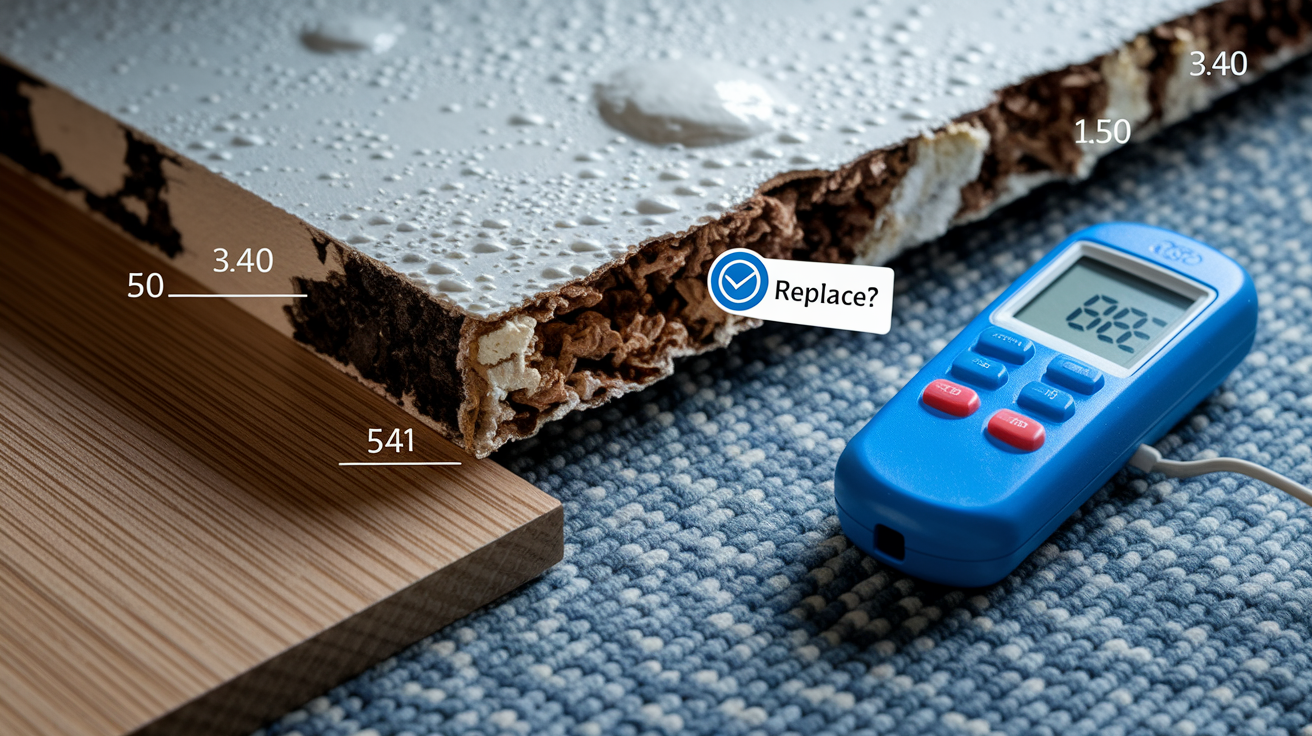
Different materials absorb and release moisture at vastly different rates. Drying efforts should focus on structurally sound materials that can return to normal function rather than wasting time on items beyond salvage.
| Material | Typical Drying Time | Special Considerations |
|---|---|---|
| Drywall | 3-5 days | Swollen or crumbling panels need replacement; paint may bubble even after drying |
| Hardwood Floors | 5-7+ days | Requires airflow under boards and subfloor; cupping and warping may be permanent |
| Carpet | 24-72 hours | Dries faster than padding; must be lifted for proper airflow underneath |
| Carpet Padding | Often replaced | Rarely salvageable after heavy saturation; acts like a sponge holding water against subfloor |
| Subfloors/Framing | 7-14+ days | Longest drying time; water seeps deep into wood grain; requires moisture meter monitoring |
| Tile/Non-porous | 1-2 days | Surface dries quickly but check grout lines and underlayment for trapped moisture |
These timelines assume professional drying equipment and optimal conditions. Household fans and open windows extend these estimates significantly. Hidden structural materials like floor joists and wall studs always take longer than visible surfaces because air movement can’t reach them directly.
Five signs materials need replacement rather than drying:
- Drywall that’s crumbling, sagging, or showing visible mold growth
- Carpet padding that remained saturated for more than 48 hours
- Hardwood flooring with severe cupping, warping, or separation between boards
- Insulation that absorbed water (loses effectiveness permanently when wet)
- Any materials contacted by contaminated water
Attempting to dry severely damaged materials wastes time and creates health and safety risks that outweigh any money saved by avoiding replacement.
Essential Equipment for Effective Burst Pipe Moisture Removal
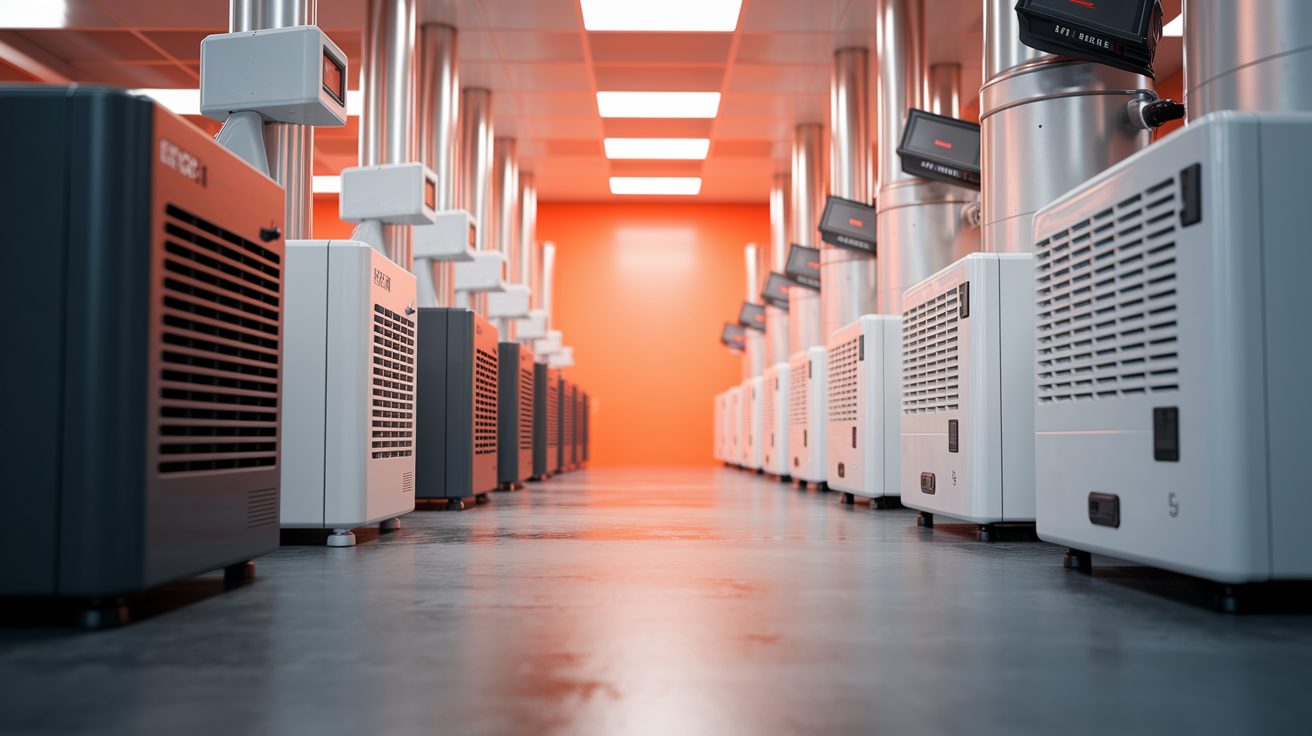
Commercial grade dehumidifiers are the primary tool for removing airborne moisture, and they operate on a completely different scale than household units. A residential dehumidifier might pull 30 to 50 pints of water per day. A commercial unit pulls 150 to 200+ pints daily and runs continuously without overheating. These machines lower humidity levels throughout affected areas, creating the dry air environment that pulls moisture out of saturated materials. They work by cooling air to condense water, which drains into collection tanks. They’re highly efficient but require warm conditions above 60°F to function optimally.
Air movers (high velocity fans) create airflow across surfaces and into structural cavities where possible, accelerating evaporation by constantly replacing moisture saturated air with drier air. Strategic placement matters. You want air moving across all wet surfaces, directed at baseboards to dry wall cavities from the bottom up, and angled under lifted flooring to reach subfloors. Three or four well placed air movers create circulation patterns that hit moisture from multiple angles. These aren’t regular box fans. Commercial air movers push 2,000 to 3,000 cubic feet of air per minute.
Moisture meters are monitoring devices that measure water content in materials, confirming complete drying rather than guessing based on how things feel. Professionals take baseline readings in dry areas, then track affected materials daily until readings match those baselines. A moisture meter shows that drywall reading 18% moisture on day one drops to 12% on day three and finally hits the normal 8% range on day five. Objective proof of progress you can’t get any other way.
Thermal imaging cameras detect hidden moisture pockets behind walls and under floors by showing temperature variations that indicate wet materials. Water saturated insulation shows up as a cold blue zone on the camera screen. A dry wall cavity appears orange or red. This technology finds problems before they become mold issues, revealing moisture in spaces that would otherwise stay hidden until damage spreads.
Raising temperature to 70 to 80°F increases evaporation rates while keeping humidity low with continuous dehumidification. The warmer the air, the more moisture it can hold before dehumidifiers pull it out. This is why restoration companies sometimes use portable heaters alongside dehumidifiers. Controlled heat plus moisture removal creates the fastest safe drying environment. But you can’t just crank the heat without managing humidity, or you’ll just move moisture around instead of removing it.
Opening windows only helps in low humidity weather and can make things worse in humid conditions by introducing more moisture into your home. Ventilation supports drying when outdoor humidity is significantly lower than indoor levels. Useful during dry winter months, counterproductive during humid summers. Dehumidification must be the primary strategy, with ventilation as a conditional supplement.
Homeowners can rent commercial dehumidifiers and air movers from equipment suppliers, but a single unit rarely matches the comprehensive equipment suites professional restoration companies deploy. Often 4 to 6 dehumidifiers and 8 to 12 air movers for a moderate burst pipe incident. Acceleration methods must maintain a controlled environment rather than rushing through incomplete drying that leaves hidden moisture behind.
Professional Restoration vs DIY Drying After Water Damage
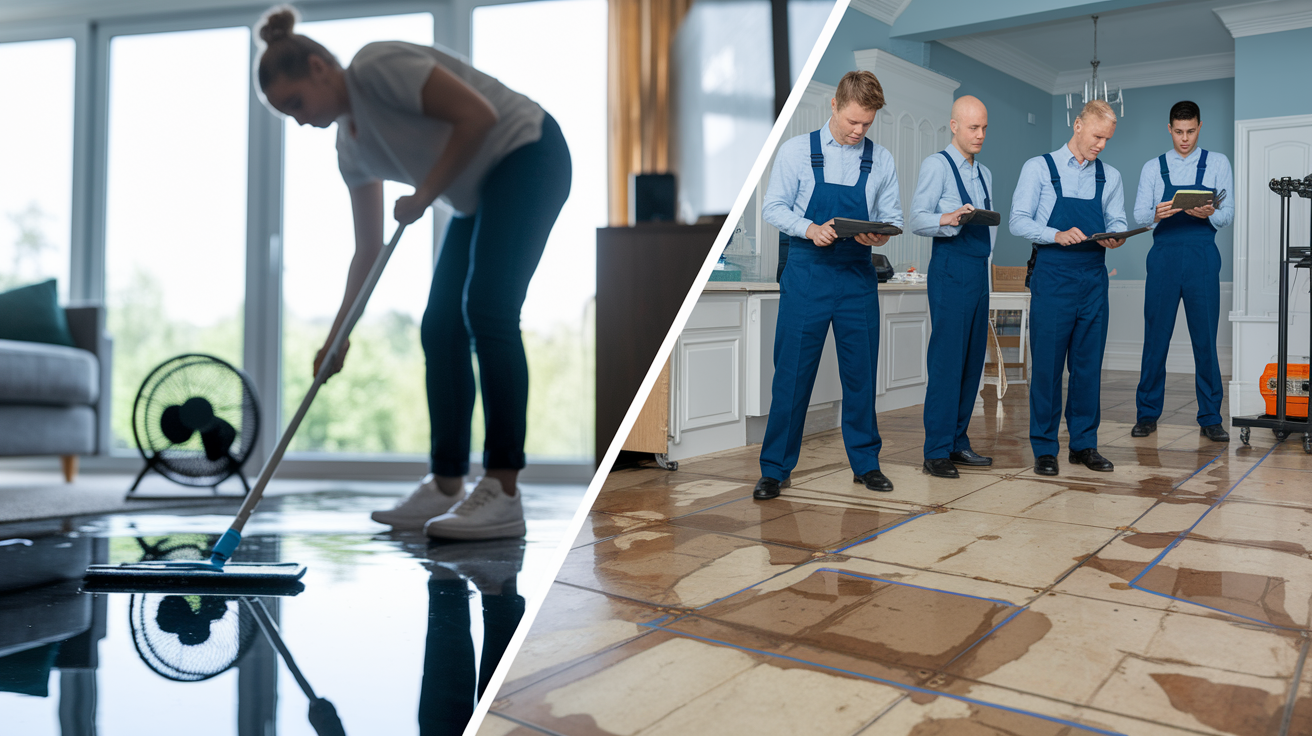
Minor surface water from a quickly stopped leak, maybe a supply line that dripped for 20 minutes before you caught it, might be manageable with household fans and a store bought dehumidifier if it only affected a small area of tile or vinyl flooring.
Burst pipes typically release significant water volume that penetrates deep into structural materials beyond DIY equipment capacity. A half inch supply line spraying at full pressure releases about 10 gallons per minute. If that runs for even 10 minutes before you shut off the main valve, you’re dealing with 100 gallons soaking into floors, walls, and everything else nearby. That volume doesn’t just puddle on surfaces. It floods into wall cavities, under flooring, and through ceiling penetrations into rooms below.
Professionals use moisture mapping and monitoring protocols to track drying progress scientifically, taking readings at dozens of points throughout affected areas and adjusting equipment placement based on data rather than guesswork. They know which readings indicate safe levels for different materials, how quickly readings should drop day to day, and when hidden moisture requires more aggressive intervention. You’ll get a daily report showing progress or concerns.
Five signs you need professional Water Damage Restoration Services:
- Water has spread beyond a single room or affected multiple floors
- Water contacted electrical systems or structural supports
- Moisture has penetrated walls, ceilings, or subflooring
- Leak continued for extended period before discovery
- Any signs of contamination or sewage contact
Preventing Mold Growth During the Drying Process
Mold spores activate in damp conditions within 24 to 48 hours after water exposure, which is why speed matters so much in the initial response. Spores are everywhere already. In your HVAC system, on surfaces, floating in the air. They just need moisture and a food source (which includes drywall paper, wood, carpet backing, and most building materials) to start colonizing. Once they start growing, you’re dealing with a mold remediation project on top of water damage restoration.
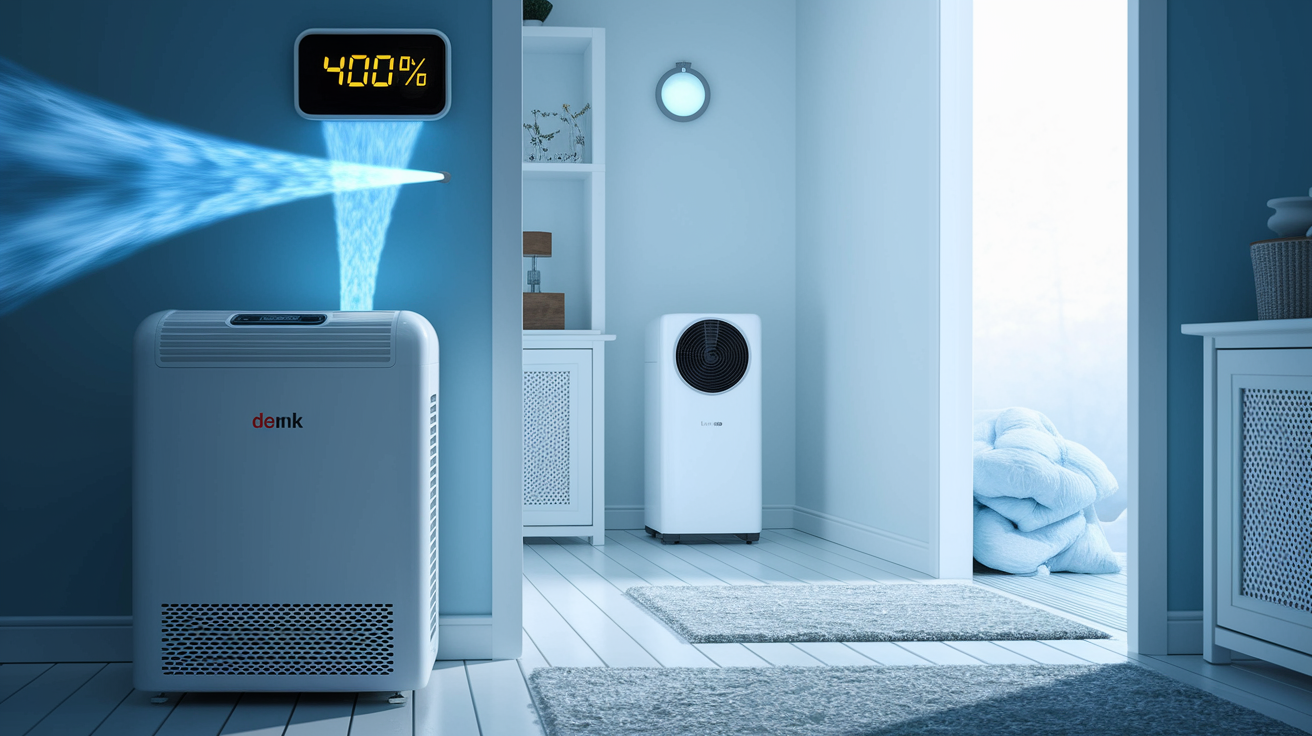
Maintaining humidity below 60%, ideally in the 30 to 50% range, during drying prevents mold colonization even when materials stay damp for several days. This is why dehumidifiers run continuously during professional restoration. High humidity creates the right environment for mold even on surfaces that aren’t directly wet. You can have 40% humidity and dry floors but 70% humidity inside a wall cavity where moisture is evaporating from soaked insulation.
Thorough drying prevents long term mold problems, but surface dryness doesn’t guarantee safety. A wall that feels dry might still hold moisture in the insulation cavity or on the back side of the drywall. That hidden moisture creates the perfect protected environment for mold growth that won’t become visible for weeks or months, until you smell it or see staining spreading from behind baseboards.
Health risks associated with mold exposure include respiratory issues, allergic reactions, asthma triggers, and persistent cough or congestion. People with existing respiratory conditions, young children, and elderly individuals face higher risks. Even non toxic mold species cause problems when growing indoors because of the spores and particles they release into the air you breathe.
Professional water damage restoration includes antimicrobial treatments in affected areas as a preventive measure, applying solutions that inhibit mold growth on materials that stayed wet long enough to risk contamination. These treatments buy time during the drying process and provide additional protection for materials that dried but might hold trace moisture in hard to reach spots.
Mold colonization that begins weeks or months after incomplete drying spreads through HVAC systems, sending spores throughout your home every time the air handler runs. Persistent odor problems, musty, earthy, or sour smells that don’t go away, indicate ongoing moisture and microbial activity hidden somewhere you haven’t addressed. Decreased property value and disclosure requirements when selling a home with water damage history become issues if the initial drying was incomplete. Mold Remediation Services cost significantly more than proper initial drying, making incomplete initial drying more expensive in the long run when you factor in remediation expenses, health impacts, and property value loss.
Monitoring Progress: How to Know When Drying Is Complete
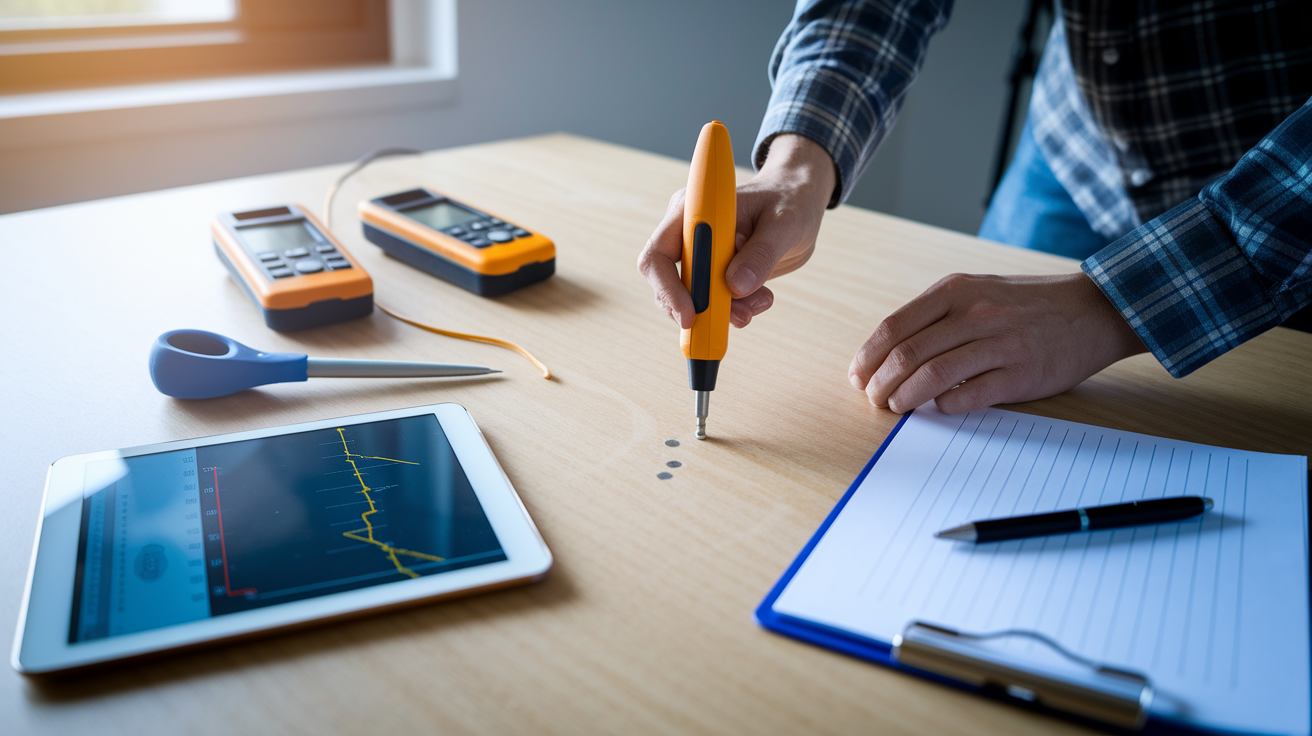
Surfaces can feel dry while internal moisture remains dangerously high. Drywall can read 15% moisture content while feeling completely normal to the touch, and wood subflooring can hold water deep in the grain while the surface appears fine.
Professional restoration uses scientific moisture readings to confirm completion, comparing current levels to baseline dry readings taken in unaffected areas of your home. The goal is matching those baselines, not hitting arbitrary targets, because every home has slightly different normal levels depending on materials and climate.
Four steps to verify complete drying:
- Use moisture meter readings compared to baseline dry readings for the same materials. Drywall in affected rooms should match drywall in dry rooms, subflooring should read the same throughout the house
- Check that humidity levels in affected rooms match unaffected areas of the home, typically within 5% when measuring at the same time of day
- Verify no musty odors remain, which indicate ongoing moisture and microbial activity even when surfaces appear dry
- Confirm no visible water stains, dampness, or condensation appears after 24 hours with equipment turned off. Materials should stay dry without continuous dehumidification
Safety Precautions During Burst Pipe Cleanup and Drying
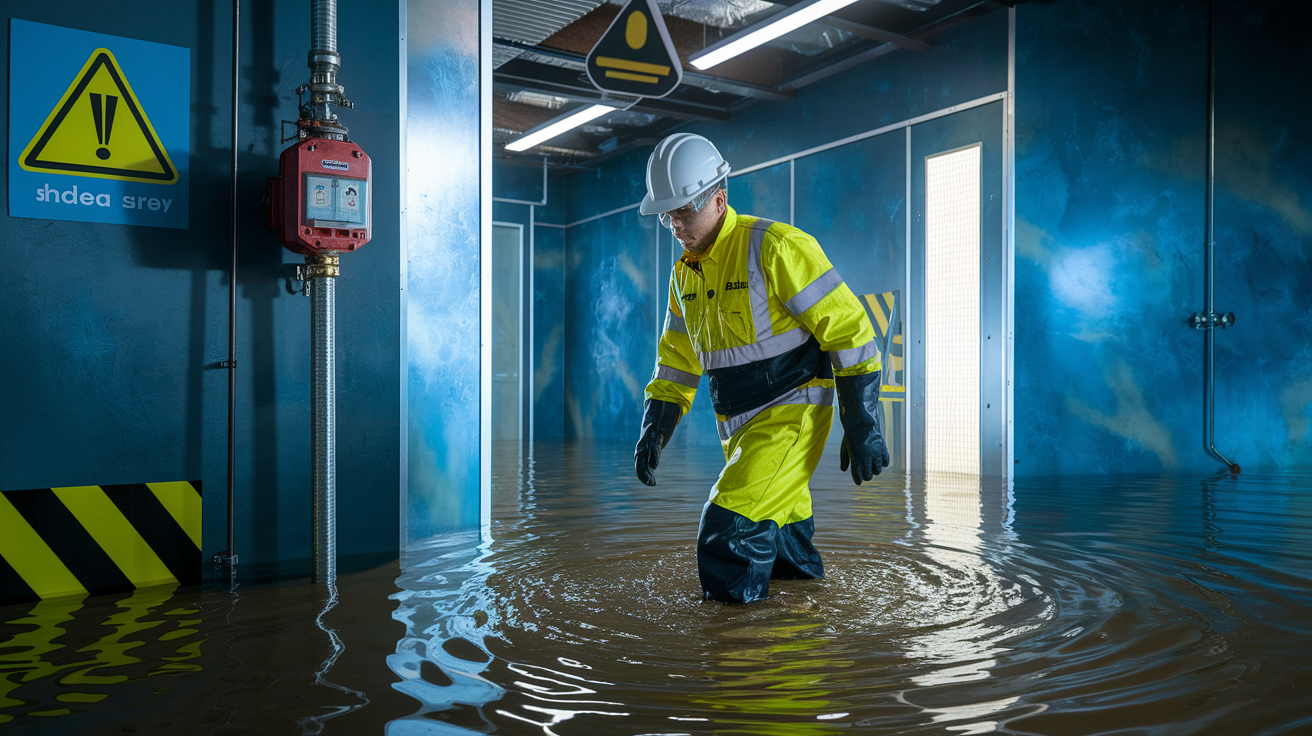
Safety must come before property preservation in burst pipe situations. Water damage creates electrical hazards, structural instability risks, and contamination concerns that can cause serious injury if you rush into affected areas without taking precautions.
Water contamination categories matter for safety protocols. Category 1 water comes from sanitary sources like supply lines, bathtubs, and clean rainwater. Relatively safe for homeowners to handle with basic precautions. Category 2 greywater contains chemicals and bacteria from sources like washing machine discharge, dishwasher overflow, or toilet overflow with urine but no feces. Requires more careful handling and protective equipment. Category 3 blackwater is the most hazardous, including sewage, outdoor flooding, or any water that’s been standing long enough to grow bacteria. Requires professional handling with full protective gear and decontamination protocols. Category 2 and 3 water require full decontamination before any repair work begins.
Six critical safety actions:
- Shut off main water supply immediately to stop additional flooding. Know where your main shutoff valve is before you need it
- Turn off electricity to affected areas at the breaker panel, not just wall switches. Water conducts electricity and creates shock hazards
- Avoid standing water near electrical outlets or appliances even after power is off. Water may still be energized from other circuits
- Wear protective gear including rubber boots and waterproof gloves when entering flooded areas to protect against contamination and sharp debris hidden underwater
- Do not use electrical equipment including vacuums, fans, or power tools in wet areas until a professional confirms safety
- Contact professionals immediately if sewage or contaminated water is involved. Don’t attempt cleanup of anything beyond Category 1 water
Working With Insurance for Burst Pipe Drying and Restoration

Most homeowner policies cover sudden burst pipe damage but may exclude gradual leaks or failures caused by poor maintenance, deferred repairs, or aging plumbing systems that weren’t updated when they should have been. The key distinction is “sudden and accidental” versus “ongoing and preventable.”
Documenting everything with photos and videos before, during, and after water extraction protects your claim and speeds the adjustment process. Take wide shots showing the extent of water spread, close ups of damaged materials, photos of the failed pipe itself, and videos walking through affected areas. Keep taking photos as drying progresses and during demolition when you expose hidden damage. This visual timeline shows adjusters exactly what happened and supports your damage estimates.
Insurance adjusters need specific information to process claims. What caused the pipe to fail, how far water spread from the source, which materials got saturated, and the timeline from failure to discovery to initial response. They’ll want to see moisture readings, equipment logs, and documentation of drying progress. Professional restoration companies experienced with insurance work document according to adjuster requirements automatically and provide detailed estimates that match insurance industry standards, making the claims process smoother.
Delaying proper drying to “save money” on restoration costs often results in secondary damage claims denials when mold appears or structural damage worsens. Insurers can argue you failed to mitigate damages promptly, which is a policy requirement after any covered loss.
What FireFloodFix.com Does Differently in Burst Pipe Recovery

Burst pipe situations require immediate coordinated response, not a DIY approach or juggling multiple contractors who handle different parts of the recovery while you manage the chaos.
FireFloodFix.com’s rapid Emergency Water Damage Services model means 24/7 availability with teams typically on site within hours, not “next available appointment” days later when water has already spread into every accessible space. That speed matters because the first 4 to 6 hours determine how much water penetrates structural materials versus getting extracted from surfaces. Fast response literally shortens the entire drying timeline by limiting damage spread.
Their comprehensive moisture detection process uses commercial moisture meters and thermal imaging to map all affected areas including hidden moisture behind walls and under floors. You’ll know exactly which rooms need equipment, where hidden concentrations exist, and what materials require monitoring. No guessing about whether moisture might be hiding somewhere. This mapping guides equipment placement for maximum efficiency instead of just setting up dehumidifiers randomly and hoping they work.
FireFloodFix.com’s end to end approach handles immediate water extraction, strategic equipment placement targeting both visible and hidden moisture, daily monitoring with equipment adjustments based on readings, and seamless transition from drying to reconstruction without handing your project off to separate contractors. One team sees the whole process through from the initial emergency call to final repairs. You get clear explanations of what’s happening, why certain decisions matter, and realistic timelines based on actual conditions rather than generic estimates. Updates happen daily during active drying, so you’re never wondering what’s going on in your own home.
Their coordinated service model through Fire and Water Damage Restoration means one team handles everything from initial emergency response through final repairs, eliminating the handoff delays that happen when water extraction companies finish and you wait days for reconstruction contractors to start. The drying team knows what the rebuild team needs documented. The rebuild team sees moisture data from day one. Nothing gets lost in translation between companies.
Final Words
Drying out after a burst pipe isn’t just about waiting for surfaces to look dry. It’s about removing all moisture from structural materials, preventing mold growth, and protecting your home’s long-term integrity.
The timeline ranges from a few days for minor leaks to over a week for severe flooding. But how long to dry out after a burst pipe really depends on your materials, response speed, and equipment quality.
If you’re dealing with water spread beyond one room, moisture in walls or subfloors, or any contamination concerns, professional restoration makes the difference between a clean recovery and ongoing problems down the road.
FAQ
How long does it take to dry a house after a burst pipe?
The time to dry a house after a burst pipe typically ranges from 2-3 days for minor incidents to 7+ days for severe flooding. Drying time depends on water volume, affected materials, humidity levels, and how quickly you start the process. Hidden moisture in wall cavities and subfloors often takes longest to dry.
How quickly does mold grow after water damage from a burst pipe?
Mold can begin growing within 24-48 hours after water exposure if affected areas aren’t properly dried. Maintaining humidity below 60% during the drying process prevents mold spores from activating. Quick water extraction and continuous dehumidification during the first two days significantly reduces mold risk.
Can water damage from a burst pipe dry out on its own?
Water damage from a burst pipe rarely dries out completely on its own. While small surface spills may air-dry, burst pipes release significant water volume that penetrates deep into structural materials. Natural air drying is slow, incomplete, and leaves hidden moisture pockets that cause mold growth and structural damage.
How do you dry out a house after a pipe burst without professional equipment?
Drying a house after a pipe burst without professional equipment requires immediately removing standing water, running household fans across wet surfaces, using store-bought dehumidifiers, and opening windows during low-humidity weather. However, DIY methods can’t reach hidden moisture in walls and subfloors, making professional restoration necessary for significant water damage.
What building materials take longest to dry after a burst pipe?
Wood framing and subfloors take longest to dry after a burst pipe, often requiring 5-7+ days because water seeps deeply into these materials. Drywall, insulation, and carpet padding also hold moisture for extended periods. Hidden structural materials always take longer to dry than visible surfaces.
When should you replace materials instead of drying them after a burst pipe?
You should replace materials showing warping, crumbling, or separation rather than attempting to dry them. Drywall that’s sagging or showing mold growth, carpet padding saturated for over 48 hours, severely warped hardwood flooring, and wet insulation typically need replacement. Any materials contacted by contaminated water require immediate removal.
What humidity level prevents mold during burst pipe drying?
Maintaining indoor humidity below 60%, ideally between 30-50%, prevents mold growth during burst pipe drying. Professional dehumidifiers continuously remove airborne moisture to keep humidity in this safe range. High humidity allows mold spores to activate on damp surfaces within 24-48 hours.
How do moisture meters confirm complete drying after water damage?
Moisture meters confirm complete drying by measuring water content inside building materials and comparing readings to baseline dry levels for those same materials. Professional technicians take multiple readings throughout affected areas. Complete drying means all materials return to normal moisture levels, not just surface dryness.
Should you turn off electricity after a burst pipe?
You should immediately turn off electricity to affected areas at the breaker panel after discovering a burst pipe. Standing water near electrical outlets or appliances creates serious shock and fire hazards. Never use electrical equipment or touch outlets in wet areas until a professional confirms safety.
Does homeowners insurance cover burst pipe drying and restoration?
Most homeowners insurance policies cover sudden burst pipe damage including emergency water extraction and drying. However, policies typically exclude gradual leaks or damage from poor maintenance. Document everything with photos and videos immediately, and contact your insurance company before starting restoration work to confirm coverage.
