
You might think restoration and remodeling are basically the same thing, but confusing them can cost you time, money, and insurance headaches. Restoration fixes damage from burst pipes, fires, or storms and gets your home back to normal. Remodeling upgrades your space based on what you want, like opening up a kitchen or finishing a basement. One’s covered by insurance and happens because something broke. The other comes out of your pocket and happens because you’re ready for something better. Knowing which one you’re dealing with changes everything about how you plan, budget, and hire.
Understanding Your Project: When to Restore vs When to Remodel

The fundamental distinction comes down to this: restoration fixes damage while remodeling makes improvements. If water’s flooding your basement or smoke’s covering your hallway, that’s restoration. If you’re thinking about opening up your kitchen or finishing that basement to add living space, that’s remodeling.
Here are ten questions to help you figure out which path fits your situation:
- Is there damage that needs repair?
- Can insurance cover the work?
- Are you changing how rooms are laid out or used?
- Are you fixing safety or structural problems?
- Are you trying to preserve what’s there or modernize?
- Do you need someone to show up right now?
- Will you need permits for structural changes?
- Does historical preservation matter?
- Where’s the money coming from (insurance or your pocket)?
- How flexible is your timeline?
Restoration happens when something breaks or gets damaged. Water damage from burst pipes during winter freezes, fire and smoke damage from kitchen incidents, storm impacts that tear off shingles or crack siding, roof leaks soaking your attic insulation, basement flooding after heavy rain, mold growth from moisture that’s been sitting too long, sewer backups contaminating living areas, and aging infrastructure failures needing urgent attention. These situations demand quick action to stop things from getting worse. You’re not choosing this work. You have to do it. And typically, your homeowner insurance covers it, which changes the whole financial picture.
Remodeling scenarios are different. They’re driven by what you want, not what broke. Outdated layouts that don’t fit how you live now, not enough space for a growing family, wanting to modernize when your house still has carpet from 1987, preparing for resale to compete with updated homes on the market, kitchen expansions to create the cooking space you’ve always wanted, bathroom additions when one bathroom isn’t cutting it anymore, basement finishing to turn wasted square footage into usable rooms, wall removal for open floor plans connecting your kitchen to your living room, and room conversions driven by lifestyle preferences like turning a dining room into a home office. You’re choosing these projects because they’ll make your house work better for you.
Some projects combine both. Maybe a pipe burst and flooded your kitchen. That’s restoration work. But while you’re already tearing out wet drywall and cabinets, you decide to upgrade the layout and install better countertops. That’s adding remodeling to restoration. When you’re not sure which category fits, talk to a professional who can look at what you’re dealing with and explain your options.
Core Distinctions: Defining Restoration and Remodeling Projects

Restoration is damage driven repair work that returns properties to pre-loss condition. It’s typically triggered by emergencies like burst pipes, fires, storms, leaks and involves stabilizing the situation, removing damage, drying out affected areas, and rebuilding what was lost. Insurance often covers this work because you’re fixing sudden, accidental problems your policy covers.
Remodeling is improvement driven construction that changes structure, layout, or function based on what you want, not what broke. It involves permits, design decisions, structural changes to walls and systems, and upgrading spaces to match your preferences or modern standards. You’re paying for this out of pocket because it’s about making things better, not just fixing what went wrong.
| Aspect | Restoration | Remodeling |
|---|---|---|
| Primary Goal | Return to pre-damage condition | Improve or change layout and function |
| Typical Trigger | Emergency or sudden damage event | Homeowner preference or lifestyle change |
| Structural Changes | Only as needed to repair damage | Intentional changes to layout and systems |
| Insurance Coverage | Often covered by homeowner policies | Not covered, owner financed |
| Permits Required | For structural repairs, may have emergency exemptions | Almost always required for major work |
| Timeline | Urgent, prevents secondary damage | Flexible, based on homeowner schedule |
Some projects include both elements. If fire damaged your kitchen, restoration puts it back together. But if you decide to change the cabinet layout and add an island while you’re already rebuilding, that’s remodeling. Understanding which category applies helps you pick the right contractor, set a realistic budget, and plan the timeline. Restoration contractors handle emergency response and insurance claims. Remodeling contractors focus on design, permits, and customization. Knowing what you’re dealing with makes the whole process clearer.
Restoration Projects: Damage Scenarios and Repair Examples

Restoration addresses damage scenarios needing urgent attention to prevent secondary damage and preserve existing property value. If you don’t act fast, water keeps spreading, mold starts growing, smoke odor sets in permanently, or structural damage gets worse. The goal is stabilization, cleanup, and getting your home back to where it was before the damage happened.
Water damage restoration examples include burst pipe cleanup and repair after a frozen line breaks overnight, basement flooding recovery when heavy rain overwhelms your sump pump, roof leak damage repair after shingles blow off during a storm, appliance leak mitigation from a dishwasher or washing machine failure, sewage backup cleanup when a clog sends contaminated water into your home, moisture control following water intrusion to prevent mold growth in walls and flooring, and drying processes using commercial dehumidifiers and air movers to pull hidden moisture out of drywall, subfloors, and insulation. Even if the surface looks dry, water can hide behind paint or inside wall cavities, creating bigger problems later if you don’t address it properly.
Fire and smoke restoration examples cover soot and smoke residue removal from walls, ceilings, and contents, odor elimination using specialized equipment and cleaning agents because smoke smell doesn’t just air out on its own, structural fire damage repair when framing or supports get weakened by heat, content cleaning coordination to salvage furniture and belongings affected by smoke, and rebuilding fire affected areas to original condition. Matching paint, flooring, trim, and fixtures so the repaired section blends with the rest of your home. Fire creates layers of damage you can’t always see, from heat warping materials to smoke penetrating porous surfaces.
Storm related restoration includes emergency tarping and boarding to protect your home from further weather exposure when a storm tears off part of your roof or breaks windows, wind damage repairs after high winds rip off siding or damage structural components, hail damage restoration when ice impacts crack shingles or dent metal surfaces, tree impact repairs if a fallen tree punches through your roof or exterior wall, and foundation stabilization after flooding events undermine soil support around your home’s base. Storms don’t wait for convenient timing, and the damage they cause needs immediate attention.
The urgency factor in restoration work can’t be overstated. Wait too long and water damage turns into mold remediation. Ignore smoke residue and it etches into surfaces permanently. Leave storm damage exposed and rain causes more destruction. Insurance coverage typically applies to these damage driven scenarios, making restoration financially accessible through claims rather than out of pocket expenses. That’s why acting quickly and documenting everything matters for both your home’s safety and your claim approval.
Remodeling Projects: Improvement Scenarios and Upgrade Examples
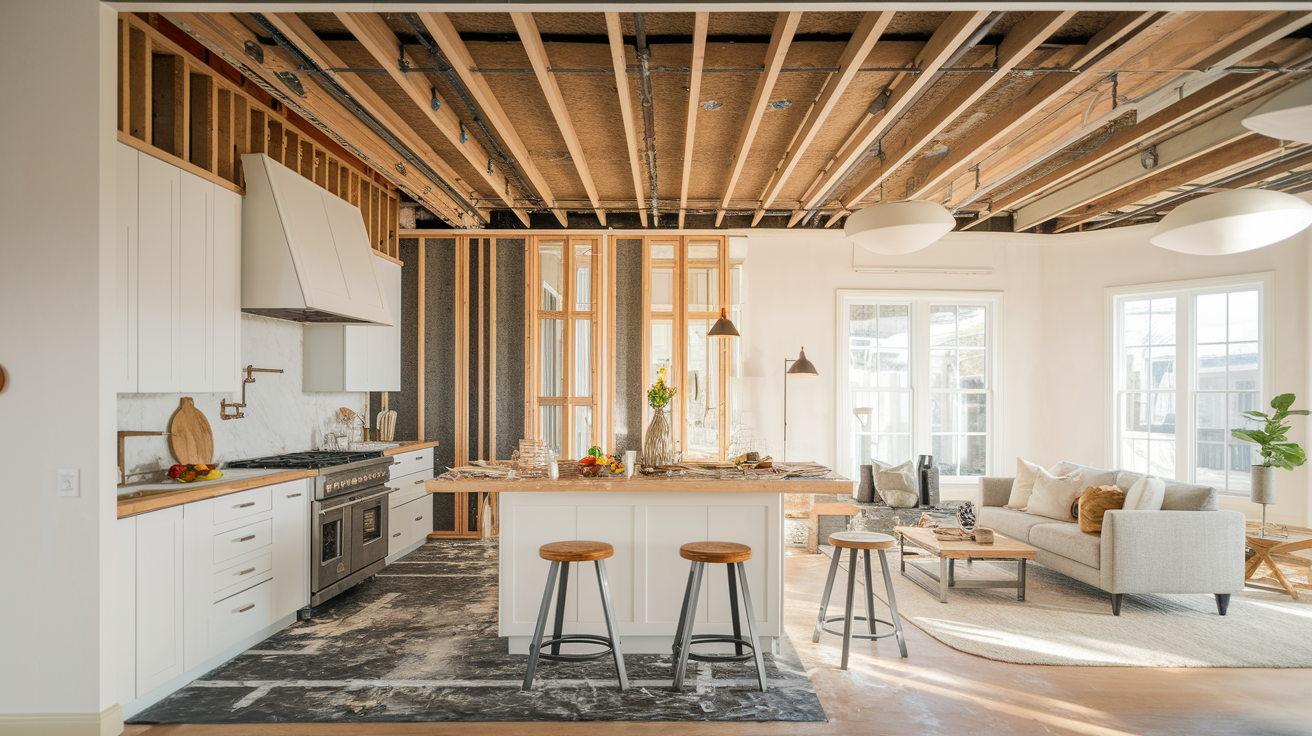
Remodeling is voluntary improvement work driven by lifestyle changes, functional needs, modernization desires, or value goals rather than damage repair. Nothing’s broken. You’re just ready for something better. Maybe your family’s grown, your tastes have changed, or you’re preparing to sell and want to compete with updated homes in your neighborhood.
Kitchen remodeling examples include cabinet replacement and layout changes to create better workflow between your sink, stove, and refrigerator, countertop upgrades from laminate to quartz or granite, appliance installation with modern energy efficient models, island additions that add workspace and casual seating, lighting improvements with recessed fixtures and under cabinet lighting, flooring changes from worn linoleum to tile or hardwood, pantry additions for better storage organization, and wall removal to create open concept spaces that connect your kitchen to your dining or living area. Kitchens take a beating over the years. And even if everything still works, outdated layouts and finishes can make the whole house feel tired.
Bathroom remodeling scenarios cover tub to shower conversions when soaking tubs go unused and you’d rather have a larger walk in shower, double vanity installations replacing single sinks to reduce morning bottlenecks, tile upgrades from basic builder grade to larger format or decorative patterns, layout reconfigurations that improve flow and add storage, accessibility improvements for aging in place like grab bars and curbless showers, fixture modernization with water efficient toilets and touchless faucets, and expanded bathroom footprints by borrowing space from adjacent closets or hallways. Bathrooms are small spaces with big impact on daily comfort and resale appeal.
Structural remodeling projects include basement finishing with new living spaces. Adding bedrooms, entertainment areas, home gyms, or playrooms by installing carpeting, drywall, ceiling, lighting, and climate control in previously unfinished below grade space. Room additions for square footage expansion when you need more space but don’t want to move, garage conversions to living space turning underused parking areas into offices, studios, or guest suites, attic bedroom conversions that transform storage spaces into functional rooms with dormers and proper insulation, and home office additions as remote work becomes permanent and you need dedicated professional space separated from household activity. These projects require permits, structural engineering, and coordination between multiple trades because you’re changing the building itself.
Remodeling lets homeowners customize spaces to match specific preferences, accommodate family changes, and improve property functionality beyond simple repair. You’re not just fixing what’s there. You’re making it exactly what you want. That freedom comes with higher costs and longer timelines than restoration, but the payoff is a home that works better for how you actually live.
Financial Planning: Costs, ROI, and Property Value Impact

Restoration costs are typically determined by damage extent and covered by insurance while remodeling costs are driven by design choices and represent out of pocket investment. When a pipe bursts, you’re not choosing between budget and luxury repairs. You’re restoring what was damaged. When you remodel a kitchen, every decision from cabinet quality to countertop material affects the final bill.
Restoration budget factors include assessment findings that determine how far water spread or how much fire damage penetrated, material replacement needs based on what can be saved versus what must be removed, drying and cleanup requirements that depend on saturation levels and affected square footage, rebuild scope matching the original condition of damaged areas, and how insurance deductibles affect homeowner costs. Typically you pay your deductible and insurance covers the rest up to policy limits. The insurance adjuster’s assessment drives the budget more than your preferences.
Remodeling budget drivers are different. Design complexity affects labor hours and specialty trades needed. Material selections ranging from budget to luxury create massive cost swings. Stock cabinets versus custom, laminate versus quartz, vinyl plank versus hardwood. Permit fees add several hundred to several thousand dollars depending on project scope and location. Contractor specialization matters because experienced remodelers charge more but deliver better results and fewer surprises. And scope of structural changes like removing walls, relocating plumbing, upgrading electrical panels adds both material and labor costs that simple cosmetic updates avoid.
Typical cost ranges vary by project type and scope:
Water damage restoration: $3,000 to $10,000
Fire restoration: $5,000 to $50,000+
Kitchen remodel: $15,000 to $60,000
Bathroom remodel: $8,000 to $30,000
Basement finishing: $20,000 to $75,000
Room additions: $40,000 to $150,000
Restoration’s property value impact focuses on prevention rather than increase. You’re preventing devaluation from unrepaired damage that would scare off buyers or trigger low appraisals, maintaining existing market value by keeping your home in the condition it was before damage occurred, avoiding stigma from visible damage that makes buyers wonder what else is wrong, protecting structural integrity that’s foundational to your home’s safety and longevity, and preserving insurability because homes with unrepaired damage or mold issues can become uninsurable. Restoration doesn’t make your home worth more. It prevents it from being worth less.
Remodeling’s value works differently. Kitchen and bathroom remodels typically return 60% to 80% of investment when you sell, meaning a $30,000 kitchen remodel might add $18,000 to $24,000 to your sale price. Increased market appeal makes your home stand out in listings and attract more showings. Expanded square footage premiums apply when you add livable space through finished basements or room additions. Modernization attracts buyers who want move in ready homes, not fixer uppers. And strategic improvements targeting what buyers care most about like kitchens, bathrooms, and curb appeal maximize resale value.
Documentation importance applies to both project types for appraisal purposes. Keep detailed records supporting insurance claims for restoration. Photos, receipts, contractor reports. And receipts proving improvements for future appraisals and resale. Homeowners should inform real estate appraisers about all changes including non-obvious improvements like rewiring and updated plumbing to properly reflect property value. And here’s something people don’t always think about: restoration followed by strategic remodeling can maximize property value by first addressing damage to protect your investment, then enhancing desirability through smart upgrades that target buyer preferences.
Timeline Expectations for Restoration and Remodeling Work

Restoration prioritizes speed to prevent secondary damage while remodeling allows more flexible scheduling based on homeowner preferences. When water’s spreading through your home, every hour counts. When you’re planning a kitchen remodel, you can choose the timeline that works for your schedule and budget.
Restoration timelines move fast. Emergency response happens same day to 48 hours after you call. Teams arrive to assess damage, stop the source if possible, and begin mitigation to prevent further loss. Drying and mitigation takes 3 to 7 days using commercial dehumidifiers and air movers to pull moisture from affected materials, with daily monitoring to track progress. Demolition and cleanup runs 1 to 2 weeks as damaged materials get removed, affected areas get cleaned and sanitized, and the space gets prepped for rebuild. And rebuild takes 2 to 8 weeks depending on scope. Replacing drywall and insulation goes faster than reconstructing entire rooms with electrical, plumbing, and finish work.
Remodeling timelines are longer and more variable. The design phase takes 2 to 6 weeks as you work with designers or contractors to finalize plans, select materials, and create detailed specifications. Permit approval adds 2 to 8 weeks depending on your local building department’s workload and the complexity of your project. Simple bathroom updates might sail through while major structural changes face more scrutiny. Material sourcing takes 1 to 4 weeks once orders are placed, longer for custom cabinets or specialty finishes. And construction runs 4 to 16 weeks depending on complexity. A straightforward bathroom remodel might finish in a month while a full kitchen gut with layout changes and new appliances can stretch to four months.
Factors that can extend either timeline include material availability when supply chain disruptions delay deliveries, permit delays if plans need revisions or building departments are backlogged, discovery of additional issues during demolition like hidden water damage, outdated wiring, or structural problems that weren’t visible during the initial assessment, weather impacts for exterior work when rain, snow, or extreme temperatures halt progress, and contractor scheduling when busy seasons or unexpected complications on other jobs push your start date. Some delays you can control through good planning. Others you just have to work through.
Permits, Building Codes, and Regulations: What Each Project Requires

Restoration work focused on returning damaged areas to original condition often requires fewer permits than remodeling that changes structure or systems, though emergency repair exemptions may apply. When you’re fixing what broke, building departments understand the urgency. When you’re changing your home’s structure or systems, they want to verify the work meets current codes and safety standards.
Restoration permit needs vary by scope and locality. Emergency work exemptions may allow immediate stabilization like tarping roofs or boarding windows without permits, though permanent repairs still need approval. Permits for structural repairs apply when you’re replacing framing, joists, or load bearing components damaged by fire or water. Electrical and plumbing system replacements need permits and inspections when damage requires rewiring circuits or replacing water supply lines. Final inspections verify code compliance before insurance companies release final payments, and documentation for insurance claim completion requires permit records and inspection approvals to prove the work was done properly.
Remodeling permit requirements are more extensive. Structural changes need permits and engineering approval when you’re removing walls, adding openings, or changing how loads transfer through your home. Layout modifications that relocate kitchens or bathrooms require permits because you’re moving plumbing and electrical. Electrical system upgrades need permits for new circuits, panel upgrades, or moving outlets and switches. Plumbing updates require permits when you’re relocating fixtures, adding bathrooms, or changing drain and supply routing. HVAC installation needs permits for new furnaces, air conditioners, or ductwork changes. Wall removal involving load bearing walls requires structural calculations and beam installation to support the loads those walls were carrying. And inspections at multiple project stages like framing, rough in, insulation, final verify each phase meets code before you move forward.
Special considerations for historic properties add another layer. Historic Architectural Review Board (HARB) review processes examine proposed changes to properties in designated historic districts. Heritage home restrictions may limit what materials you can use or how much you can alter exterior appearance. Period appropriate material requirements mandate matching original architectural styles and construction methods. And preservation standards may mandate restoration approaches over modern remodeling, like repairing original wood windows rather than replacing them with vinyl.
Verify local requirements with building departments before starting either project type. Call or visit your city or county building department, describe your project, and ask what permits you’ll need and what the approval process involves. Permit violations can affect resale when buyers’ home inspectors notice unpermitted work and lenders refuse to close until it’s corrected. They can also affect insurance coverage if your policy excludes losses related to unpermitted construction. The permit process feels like a hassle until you need to prove the work was done right.
Material Selection in Restoration Projects vs Remodeling Upgrades

Restoration prioritizes matching existing materials and preserving architectural integrity while remodeling allows freedom to select new materials based on preference, performance, and budget. When you’re restoring fire damage, the goal is making the repaired area disappear into the rest of your home. When you’re remodeling, you get to pick exactly what you want.
Restoration material considerations focus on matching existing finishes so repaired areas blend. Matching paint colors, flooring patterns, trim profiles, and fixture finishes to what’s already there. Sourcing period appropriate fixtures matters when original components were discontinued years ago and you need to find similar replacements through salvage yards or specialty suppliers. Using salvaged components when possible helps maintain authenticity, like reusing original hardware or trim pieces that survived the damage. Repairing rather than replacing character elements like wood molding, paneling, and built ins preserves the craftsmanship and materials that define your home’s personality. Maintaining historical accuracy becomes critical for older homes where modern replacements would stick out. And preserving architectural integrity that defines property character means understanding what makes your home special and protecting those elements through the restoration process.
Remodeling material freedom opens up different choices. Contemporary design options let you pick modern finishes, clean lines, and current trends without worrying about matching the past. Energy efficiency upgrades like low-E windows, improved insulation, and high efficiency appliances reduce utility costs and environmental impact. Smart home technology integration adds features that didn’t exist when your house was built. Programmable thermostats, app controlled lighting, touchless faucets. Customization options matching personal style mean you’re not stuck with builder grade basics or someone else’s taste. Sustainable material choices like bamboo flooring, recycled glass countertops, or reclaimed wood bring environmental benefits. And balancing quality with budget constraints lets you splurge on focal points like countertops while saving on hidden elements like underlayment.
Some projects blend both approaches well. Maybe fire damaged your dining room, and restoration repairs the damaged drywall, refinishes scorched wood molding to match the rest of the house, and repaints with the original color. But you decide to upgrade the light fixture to something more efficient and update the outlet covers to modern styles. You’re repairing damaged structural elements with matching materials to preserve character while upgrading fixtures, appliances, and finishes to modern standards for improved functionality and efficiency. That balance protects what makes your home special while taking advantage of the opportunity to improve what was outdated anyway.
Insurance Coverage: How Restoration and Remodeling Differ

Restoration addressing sudden, accidental damage is typically insurance covered while remodeling representing elective improvements is owner financed. Insurance pays to fix what broke. It doesn’t pay to upgrade what you don’t like.
Restoration insurance scenarios include covered perils like water damage from burst pipes, sudden and accidental failures that happen without warning, fire and smoke damage from kitchen fires, electrical malfunctions, or lightning strikes, storm impacts including wind, hail, and falling trees, sudden appliance failures when water heaters or washing machines flood your home, and vandalism when someone damages your property intentionally. The claims process timeline runs from initial assessment where an adjuster documents damage and estimates repair costs, through mitigation approval to prevent further damage, demolition and cleanup once the scope is approved, rebuild authorization after plans and budgets are finalized, and final payment when work is completed and inspected. Your homeowner policy covers the cost of returning your home to pre-loss condition, minus your deductible.
Remodeling is an elective investment you’re choosing to make. Out of pocket financing means you’re paying from savings or income. Potential home equity loans let you borrow against your home’s value to fund improvements. Construction loans provide staged funding as work progresses, with inspections required before each payment. Personal savings allocation might mean budgeting over months or years before starting the project. And how improvements may increase insurance premiums matters because higher property values and more expensive finishes mean higher replacement costs, so your coverage limits and premiums adjust upward to match your home’s new value.
Documentation importance serves different purposes for both project types. Detailed records supporting insurance claims for restoration include photos of damage before cleanup starts, receipts for emergency mitigation and temporary housing, contractor estimates and invoices, and adjuster reports documenting the assessment and approved scope. Receipts proving improvements for future appraisals and resale include material invoices, contractor payments, permit records, and before and after photos showing the scope of work completed. When you sell, buyers want to see that improvements were done properly, and appraisers need documentation to justify higher valuations.
Some projects have both insurance covered restoration components addressing damage and owner paid upgrade elements that go beyond original condition. Maybe a burst pipe floods your bathroom. Insurance covers restoring it to the condition it was before the flood. Same tile, same vanity, same fixtures. But you decide to upgrade to a double vanity and higher end tile while you’re already tearing everything out anyway. Your insurance pays for base restoration, and you pay the difference for upgrades. Clear scope separation in contracts protects everyone. The insurance company knows what they’re paying for, you know what you’re paying for, and the contractor knows exactly what work each funding source covers.
Choosing the Right Contractor for Restoration or Remodeling

Restoration and remodeling require different contractor specializations, certifications, and expertise areas. A contractor who builds beautiful custom kitchens might have zero experience extracting water or removing smoke damage. A restoration company that responds to emergencies 24/7 might not have design services or custom finish carpentry. Matching contractor to project type matters.
Restoration contractor qualities include emergency response capability, answering calls at 2 AM when your basement floods and arriving within hours to start mitigation. Water extraction and drying equipment like truck mounted extractors, commercial dehumidifiers, and air movers that homeowners don’t own. Smoke and soot cleanup expertise using specialized cleaning agents and techniques that regular cleaning can’t handle. Structural repair experience rebuilding damaged framing, drywall, and finish work to match existing conditions. Mold remediation certification for containment, removal, and treatment following industry protocols. Insurance claim familiarity navigating the documentation, approval, and payment process with adjusters. And documentation practices supporting claims approval, detailed photos, moisture readings, daily logs, and itemized estimates that justify the scope and cost.
Remodeling contractor attributes focus on different strengths. Design collaboration ability to translate your vision into workable plans, offer suggestions based on experience, and problem solve when your ideas hit budget or structural constraints. Permit management experience handling applications, revisions, inspection scheduling, and final approvals without delays or rejections. Project timeline management coordinating material deliveries, subcontractor schedules, and inspection appointments to keep work moving. Craftsmanship quality visible in portfolio photos. Clean tile work, tight joints, level installations. Specialty trade coordination for electrical, plumbing, HVAC ensuring all systems integrate properly. Architectural vision understanding how changes affect flow, function, and aesthetics beyond just executing your instructions. And portfolio demonstrating similar project complexity so you’re not their first basement finish or kitchen gut.
Vetting steps apply to both contractor types:
- License and insurance verification through your state’s contractor licensing board
- References and portfolio review talking to past clients and seeing completed projects
- Written estimates with detailed scope breaking down labor, materials, and timeline
- Contract clarity including payment schedules tied to milestones, not just dates
- Warranty coverage for materials and workmanship protecting you after completion
- Communication practices and availability explaining how they’ll keep you updated
- Timeline commitments with milestone dates showing when major phases will finish
Companies that offer both restoration and remodeling services provide streamlined project management when damage repair creates opportunities for strategic upgrades. You’re dealing with one team who handles insurance documentation for the restoration portion and coordinates upgrade work you’re paying for yourself, eliminating the confusion of multiple contractors, conflicting schedules, and finger pointing when something doesn’t go as planned. One contract, one point of contact, one team responsible from emergency response through final walkthrough.
Final Words
Deciding between residential restoration vs remodeling comes down to one clear question: are you fixing damage or choosing improvement?
Restoration responds to emergencies and unexpected damage—burst pipes, fire, storms—and works to bring your home back to where it was. Remodeling is driven by vision and preference, changing structure and function to create something different.
Some projects combine both. You might restore fire damage in the kitchen and remodel the layout at the same time.
Understanding which category fits your situation helps you pick the right contractor, plan the budget, and set realistic timelines. If you’re working through damage, restoration gets you stable. If you’re ready for change, remodeling gives you room to grow.
Either way, the goal is the same: a home that works, looks right, and feels safe again.
FAQ
What is the difference between a restoration and a renovation?
A restoration returns a home to its previously safe condition after property damage like floods, fires, or storms, while a renovation involves cosmetic updates or improvements to modernize spaces without structural changes. Restoration addresses damage-driven needs, often covered by insurance, whereas renovation pursues improvement goals funded by homeowners.
What is the 30% rule for renovations?
The 30% rule for renovations suggests that if repairs or improvements exceed 30% of your home’s current market value, you should carefully evaluate return on investment and consider prioritizing projects that enhance resale value. This guideline helps homeowners avoid over-improving beyond neighborhood standards and ensures strategic budget allocation.
Is $100,000 enough to renovate a home?
$100,000 is enough to complete substantial home renovations including full kitchen remodels, multiple bathroom updates, or basement finishing projects, depending on material selections and project scope. This budget typically covers mid-range improvements with quality materials, though high-end finishes or structural additions may require additional funds.
What not to say to a general contractor?
Don’t tell a general contractor “just do whatever you think is best” without clear scope documentation, or demand unrealistic timelines that compromise quality workmanship. Avoid discussing other contractors’ lower bids without context, withholding budget information that affects material selection, or requesting cash payments that eliminate warranty protection and documentation.
When should I choose restoration over remodeling for my property?
Choose restoration over remodeling when addressing property damage from emergencies like water intrusion, fire, storms, or burst pipes requiring immediate attention to prevent secondary damage. Restoration work is typically insurance-covered and focuses on returning your home to pre-loss condition rather than making elective improvements.
Can restoration and remodeling happen in the same project?
Restoration and remodeling can happen simultaneously when repairing damage creates opportunities to upgrade affected areas beyond original condition, such as rebuilding fire-damaged kitchens with modern layouts. This combined approach requires clear scope separation between insurance-covered restoration work and owner-paid improvement elements in project contracts.
How long does restoration work typically take compared to remodeling?
Restoration work typically takes 2-8 weeks after emergency response and drying phases, prioritizing speed to prevent secondary damage, while remodeling projects span 4-16 weeks depending on complexity and design choices. Restoration timelines are compressed due to urgency, whereas remodeling allows flexible scheduling based on homeowner preferences and material availability.
Do restoration projects require building permits like remodeling does?
Restoration projects focused on returning damaged areas to original condition often require fewer permits than remodeling that changes structure or systems, though structural repairs still need electrical and plumbing permits. Emergency repair work may qualify for permit exemptions, while remodeling involving layout changes, wall removal, or system upgrades requires comprehensive permitting and inspections.
